

How long does plastic take to decompose? Understanding the impact of plastic packaging
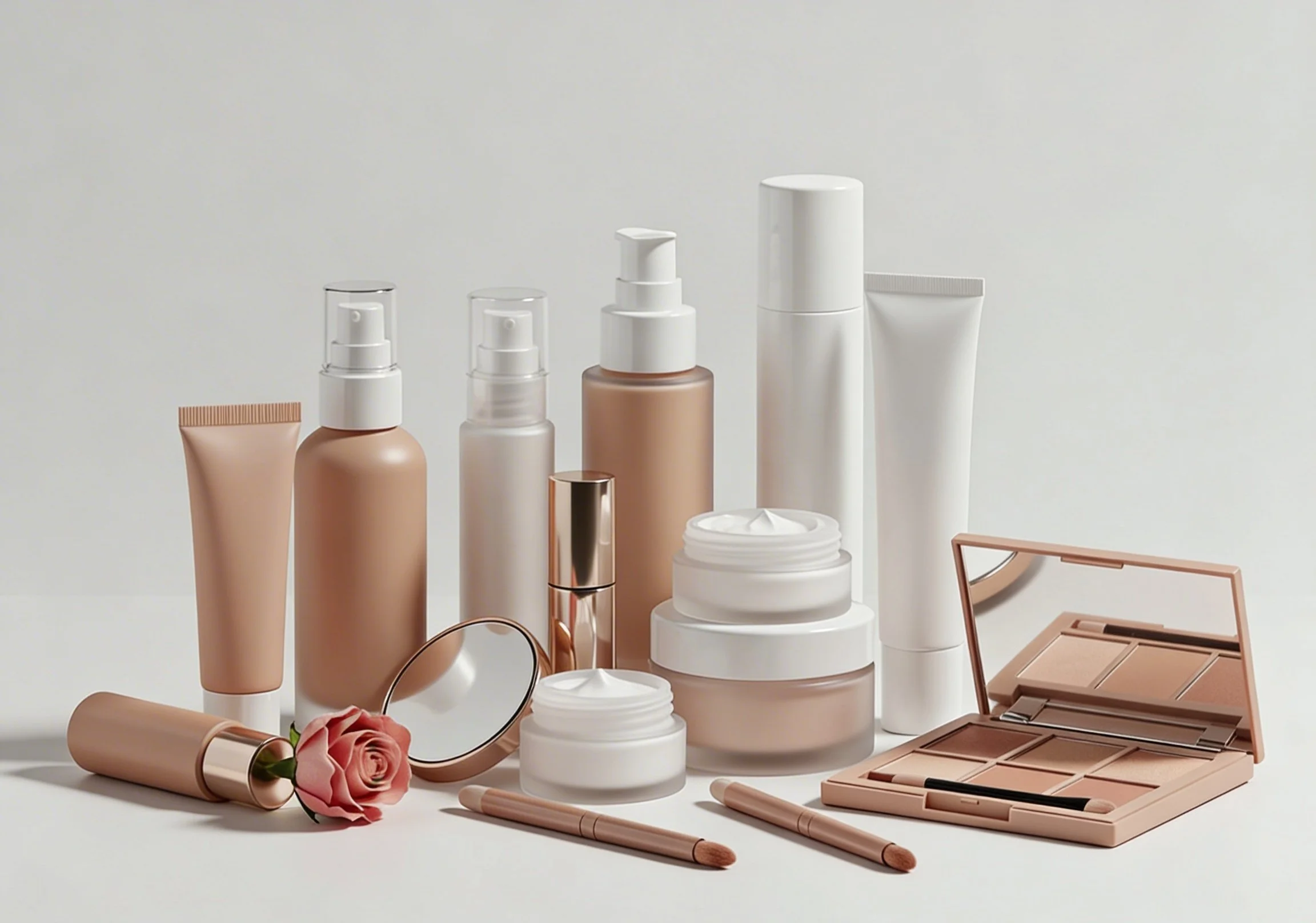
How long does packaging material remain in the environment once the product has been used?
The answer is often surprising. For example, a plastic bottle that takes only a few minutes to empty can persist for centuries before fully degrading. According to estimates from the US National Oceanic and Atmospheric Administration (NOAA), certain plastic items can remain in marine environments for hundreds of years, gradually breaking down into smaller pieces rather than disappearing entirely.
Plastic was designed to be durable: its resistance to moisture, microorganisms, and chemical degradation makes it highly effective at protecting products during transport, storage, and daily use. However, these same properties extend the material's lifespan far beyond that of the product it contains.
In the beauty industry, where large volumes of packaging formats such as jars, pumps, caps and applicators are produced, understanding the lifespan of materials is part of a broader conversation about design choices and material strategies.
The historical role of plastic in packaging should not be called into question simply because we are exploring how long it takes to decompose. Rather, it means gaining an understanding of its persistence, its environmental pathways and the potential implications of these timelines for future material selection.
How long do different plastic items take to decompose
Once discarded, plastic does not disappear quickly. Most synthetic polymers degrade extremely slowly, particularly in marine environments, where oxygen levels, sunlight exposure and microbial activity differ from those on land.
Several international studies have attempted to estimate the decomposition timescales of common plastic products. While the exact duration varies depending on environmental conditions, the available data provide a useful reference point for understanding how long everyday plastic items persist.
According to data compiled by the US National Oceanic and Atmospheric Administration (NOAA), plastic materials commonly used across many consumer products, including cosmetic packaging, can persist in the environment for decades or even centuries:
Flexible plastic films used in sample sachets or refill pouches: up to 20 years;
Polystyrene-based materials sometimes used in rigid cosmetic containers: around 50 years;
Conventional plastics used in cosmetic bottles, jars and make-up packaging: approximately 450 years;
Multi-layer hygiene products containing plastic components: up to 450 years;
Nylon-based synthetic polymers: up to 600 years.
These numbers illustrate an important characteristic of plastic materials: durability extends far beyond the functional lifespan of the products they contain.
Decomposition vs fragmentation: what actually happens to plastic
The term decomposition can be misleading when applied to plastics. In most cases, plastic does not biodegrade in the way organic materials such as wood or paper do.
Instead, exposure to sunlight, mechanical stress and environmental conditions gradually breaks larger plastic objects into smaller fragments. This process, known as photodegradation and mechanical fragmentation, produces particles that become progressively smaller over time.
These particles are commonly referred to as microplastics.
Microplastics can disperse across marine and terrestrial ecosystems, where they may be ingested by wildlife and enter broader biological cycles. Scientific research on the long-term implications of microplastic accumulation continues to evolve.
For packaging designers and material engineers, this distinction is significant: the environmental persistence of plastic packaging is not only related to visible waste, but also to the gradual transformation of materials into microscopic particles that remain in circulation.
Why cosmetic packaging plays a critical role
The issue of plastic persistence is particularly relevant in the beauty industry, where there are numerous and technically sophisticated packaging formats, often composed of multiple elements that work together.
A typical cosmetic packaging system rarely consists of a single component. Instead, it incorporates several functional parts designed to provide protection, precise dispensing and user comfort. Pumps regulate dosage and protect formulas from contamination. Caps secure the closure and maintain product stability. Jars and bottles provide structural containment and shape the product's visual identity.
Many of these formats rely on multi-material assemblies to function correctly.
For example, a pump may combine a plastic housing with a metal spring to enable the pumping mechanism. Closure systems may integrate plastic with elastomer seals to ensure airtightness. Decorative elements, such as coatings, metallisation or additional layers, are often added to enhance the packaging's visual appeal.
From an engineering perspective, these combinations are often necessary to guarantee performance. However, from an end-of-life perspective, they introduce complexity.
When materials such as plastic, metal and elastomers are permanently assembled together, they are difficult to separate within standard recycling streams. Consequently, many cosmetic packaging components require more advanced sorting and recycling processes, which are not always widely available.
Looking at new ways to make packaging for cosmetics
As the environmental persistence of plastic is better understood, the packaging industry is gradually exploring new material strategies that balance performance, manufacturability and long-term impact.
One important approach is material reduction. Simplifying packaging structures, minimising unnecessary layers and reducing overall material usage can significantly reduce a product's lifecycle footprint without compromising functionality.
Another approach is to focus on mono-material strategies, where packaging components are designed using a single material family wherever possible. This simplifies sorting and improves compatibility with existing recycling systems.
Meanwhile, innovation continues to expand the range of alternative materials available for cosmetic packaging. Rather than relying exclusively on fossil-based polymers, designers and engineers are increasingly exploring materials derived from renewable or circular sources.
Among these options, glass remains a well-established solution thanks to its chemical stability, durability and recyclability. Wood is a renewable material that offers distinctive tactile qualities and strong aesthetic value, particularly when sourced from responsibly managed forests. Bio-based materials, which are derived from plant-based or alternative biological resources, are also gaining attention as technologies evolve.
The objective is not to replace one material with another indiscriminately, but to develop balanced material strategies where each component of a packaging system is selected according to its technical role, environmental profile and long-term usability.
READ ALSO:
Why a cosmetic packaging mockup is the first step toward the right product
Nissaba: designing a wood cap aligned with a sustainable brand vision

An example of sustainable cosmetic packaging can be seen in our collaboration with Nissaba, a fragrance brand whose philosophy centres on using recyclable, reusable, bio-based and upcycled materials. For this project, we developed a mahogany wooden cap to complement the Nissaba fragrance line, translating the brand’s environmental vision into a tangible packaging element.
The design was carefully engineered to create a distinctive aesthetic that is instantly recognisable, while maintaining an approach to materials that is aligned with the brand’s commitment to reducing its environmental impact. The cap incorporates an internal O-ring that is inserted without the use of adhesives to ensure a secure closure that protects the fragrance pump from accidental activation while preserving the integrity of the packaging system.
In terms of materials, the project also adheres to strict sourcing standards: the wood used for the cap is Forest Stewardship Council (FSC) certified, ensuring responsible forest management and full traceability throughout the supply chain. The result is a packaging component that combines technical functionality, refined design and responsible materials and is perfectly aligned with the identity of the Nissaba fragrance collection.
The future of beauty packaging design beyond plastic dependence
The evolution of beauty packaging is increasingly centred on material diversification and structural intelligence. Rather than relying on a single dominant material, packaging systems are increasingly being designed as balanced combinations, with each component serving a specific technical and environmental purpose.
Structural design plays an important part in this transition. By reconsidering how packaging elements interact, engineers can reduce unnecessary complexity while enhancing durability and long-term usability. Formats designed for extended lifespans, refill compatibility, or modular replacement offer new possibilities for reducing material throughput across product cycles.
Within this evolving landscape, wood components are gaining attention for use in caps, overcaps and external structures, thanks to their renewable origin and tactile qualities. Meanwhile, glass formats continue to provide stability and chemical compatibility for many cosmetic formulas. At the same time, refill systems and durable packaging architectures are paving the way for longer product lifecycles and more flexible material strategies.
To rethink packaging materials, you first need to understand their lifecycle.
If you are exploring alternative material strategies for cosmetic packaging and want to develop integrated solutions combining wood, glass and advanced materials, contact the mPackting team at mpackting.com to start the conversation about your next packaging project.
