

Packaging for manufacturers: sustainable solutions for the beauty industry
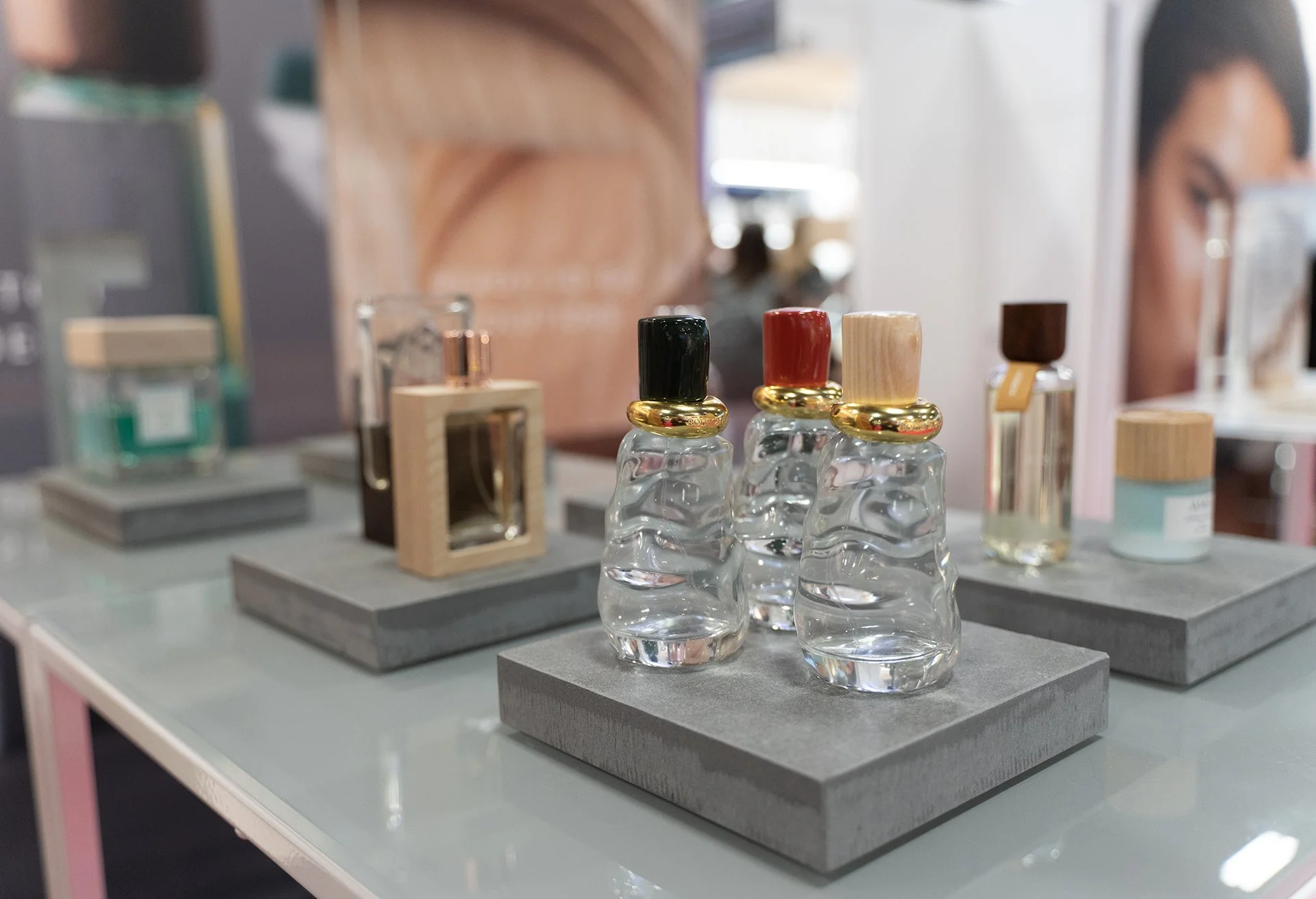
One of the first strategic decisions you face when developing a cosmetic product is the packaging.
Three factors come into play immediately. First, the material must protect the formula and preserve its stability. The components must interact precisely to ensure that pumps, closures and containers function flawlessly. At the same time, the packaging must convey the product's identity the moment it is seen or touched.
Balancing these dimensions is rarely straightforward.
Expectations regarding sustainability, regulatory requirements and industrial feasibility are increasingly shaping how packaging systems are conceived and produced.
Caps, pumps, glass bottles and dispensing systems are typically developed by specialised partners, each of whom contributes expertise to a specific part of the packaging architecture. Ensuring these elements interact seamlessly requires careful coordination to ensure materials, mechanisms and structures work coherently together from functional and design perspectives.
For many beauty projects, the challenge no longer lies solely in selecting individual components. The focus is shifting towards integrated packaging systems where materials, closures and structural elements are aligned from the outset to ensure consistency in terms of performance, aesthetics and long-term material strategy.
Why packaging has become a strategic challenge for manufacturers
The development of packaging in the beauty industry has become significantly more complex over the past decade. Packaging, which once functioned primarily as a container, now plays a broader role in product strategy, brand positioning and regulatory compliance.
Several forces are shaping this shift.
Firstly, sustainability expectations continue to grow across the beauty sector. Consumers, retailers and investors are paying more attention to the origin of materials, recyclability and the environmental impact of packaging solutions. These expectations influence material selection, structural design and lifecycle considerations.
At the same time, regulatory frameworks in Europe are evolving rapidly. Initiatives such as the Packaging and Packaging Waste Regulation (PPWR) introduce stricter requirements relating to recyclability, waste reduction and material transparency. These regulatory developments mean that packaging systems must be designed with greater foresight and technical alignment.
Another factor to consider is supply chain complexity. Cosmetic packaging often comprises multiple components, such as caps, pumps, bottles, inserts and decorative elements, produced by different specialised partners. Ensuring compatibility across these elements requires careful coordination throughout the development process.
Finally, packaging has become a key driver of premium differentiation. Materials, textures and structural design directly impact perceived value and brand identity on the shelf.
Taken together, these factors redefine the role of packaging in the development of cosmetic products. Packaging is no longer simply a container.
It now functions as an integrated system where materials, mechanisms and design must evolve together to deliver performance, coherence and long-term viability.
Key requirements for sustainable cosmetic packaging
Developing sustainable cosmetic packaging requires a balance of technical and environmental considerations. From the early stages of development, material choice, structural design and industrial feasibility must be aligned to ensure that the packaging performs reliably while supporting evolving sustainability goals.
One important aspect is material traceability. Knowing the origin of materials and the conditions under which they are sourced is becoming increasingly important for regulatory compliance and brand transparency. Traceable materials, such as responsibly sourced wood or certified supply chains, help to ensure that packaging solutions align with broader sustainability commitments.
Another key factor is recyclability. Packaging systems with clear material streams and simplified structures are easier to process within existing recycling infrastructures. Eliminating unnecessary layers or incompatible materials can significantly enhance the end-of-life potential of cosmetic packaging.
Equally important is structural durability. Cosmetic packaging must maintain its mechanical integrity throughout repeated use, protecting the formula and preserving the quality of the user experience. Caps, pumps and dispensing systems must also continue to function reliably throughout the product's lifespan.
Compatibility with cosmetic formulas is also critical. Materials must resist interacting chemically with active ingredients, fragrances or oils in order to maintain product stability and safety over time. Careful material selection ensures that the packaging supports both the performance of the formula and the longevity of the product.
Finally, packaging solutions must be compatible with industrial scalability. Designs developed for sustainability must also be capable of consistent mass production, ensuring that responsible material strategies can be implemented in real production environments.
Material strategies in modern beauty packaging
Selecting the right material remains one of the most important aspects of developing cosmetic packaging. Each material offers specific advantages in terms of performance, perception and environmental impact. Rather than relying on a single option, many packaging systems combine materials strategically, selecting each one according to its technical function.
Today, several material families coexist within beauty packaging:
✅ Plastic continues to play an important role thanks to its ability to support complex dispensing systems, such as pumps, wipers and applicators. These technical properties explain why it remains widely used across many cosmetic formats.
✅ Glass is valued for its chemical stability, premium appearance and compatibility with a wide range of cosmetic formulas. It also benefits from well-established recycling streams in many regions.
✅ Wood offers a renewable material option with strong tactile and aesthetic qualities. When responsibly sourced, it can contribute to material diversification while adding distinctive value to caps, closures and external components.
✅ Bio-based materials derived from renewable resources are expanding the range of possibilities. The aim of these materials is to reduce dependence on fossil resources while maintaining the functional properties required for packaging applications.
Rather than replacing one material with another universally, the focus of modern packaging development is increasingly on selecting the right material for each function within the system, balancing performance, perception and lifecycle considerations.
Exploring integrated material strategies through design concepts
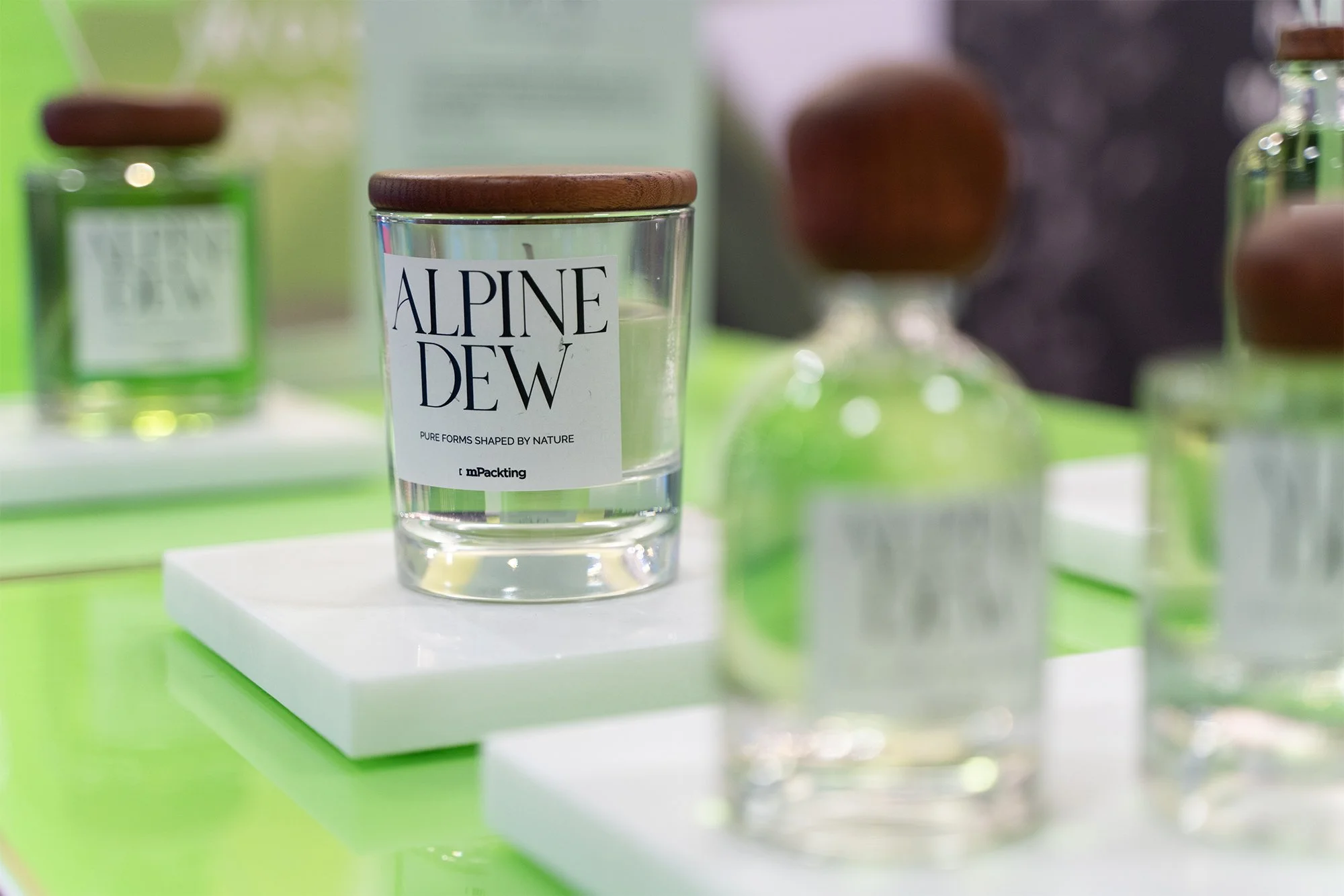
Design-driven concepts are often developed as reference projects to explore how different materials can interact within a coherent packaging architecture. These packaging studies enable engineers and designers to evaluate proportions, tactile perception, and material balance before proceeding to industrial development.
One such example is Alpine Dew, a conceptual packaging collection developed by mPackting to investigate the integration of FSC®-certified wood and glass within a unified system. The design combines the transparency and stability of glass with the warmth and tactile qualities of solid wood to create packaging that conveys a natural and premium aesthetic through material contrast.
Beyond aesthetics, the concept also demonstrates how different materials can be coordinated structurally. The caps, containers and functional elements are designed to work together as a coherent system, showing how material selection, structural design and sensory perception can evolve together in the development of modern beauty packaging.
Designing beauty packaging as an integrated system
In the beauty industry, packaging development increasingly requires a systemic perspective. Materials, structures and functional elements must be considered together to ensure balanced performance, perception and sustainability.
This process involves selecting the right combination of materials, coordinating specialised suppliers and designing packaging architectures that remain coherent at an industrial scale. When integrated thoughtfully within a unified system, glass, wood, bio-based materials and engineered components each bring specific advantages.
If you are looking for sustainable packaging solutions for the beauty industry, the mPackting team can help you develop integrated systems combining wood, glass and advanced materials.
Contact us at mpackting.com to start the conversation about your next packaging project.
