

Latest news and innovations in eco-friendly beauty packaging solutions
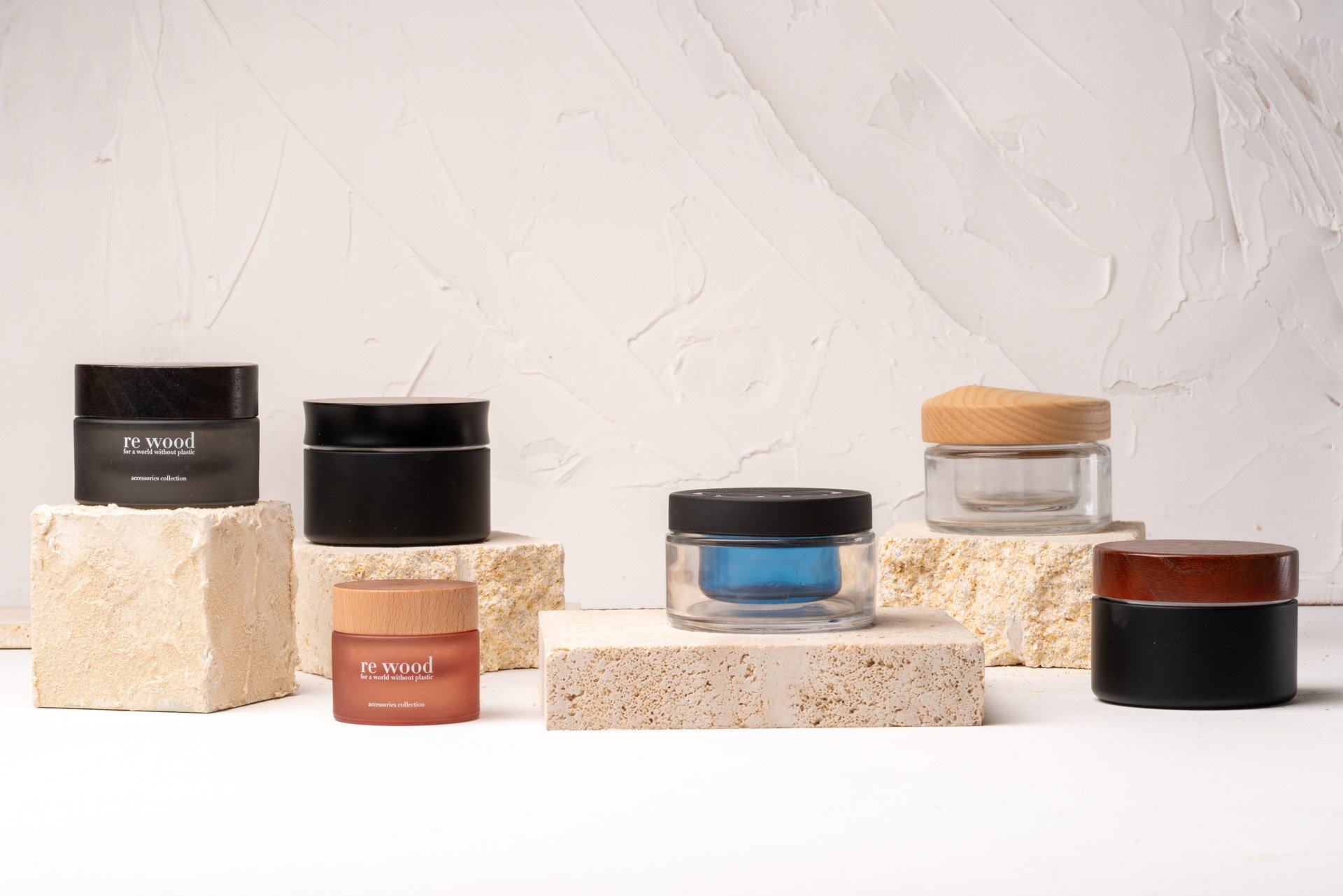
Innovation in beauty packaging is accelerating. Materials are evolving and refill systems are becoming more sophisticated, with brands rethinking how packaging can combine performance, aesthetics, and environmental responsibility.
In the past,eco-friendly packaging meant simply replacing one material with another. Today, however, the conversation is far broader. Sustainability now encompasses material sourcing, structural design, recyclability and lifecycle thinking. These factors work together to create packaging systems that are technically reliable while reducing environmental impact.
The beauty industry is exploring a wide range of innovations that balance technical performance with responsible material use, from renewable materials and refillable architectures to new approaches involving glass, wood and bio-based polymers.
Read on to explore some of the latest innovations in eco-friendly beauty packaging solutions and discover how they are redefining cosmetic packaging design.
Key innovations transforming beauty packaging
Several innovation paths are gaining momentum across the industry. Renewable materials are entering the packaging landscape alongside traditional substrates. Refillable systems are changing how products are used and repurchased. At the same time, engineers and designers are simplifying structures to improve recyclability and reduce unnecessary material complexity.
The following sections explore some of the most relevant innovations in eco-friendly beauty packaging today, ranging from alternative materials to new structural strategies that influence how packaging systems are designed.
Bio-based and renewable materials
One of the most visible areas of innovation in eco-friendly beauty packaging is the development of bio-based and renewable materials designed to complement or partially replace fossil-based plastics. The aim is to maintain the technical performance required for cosmetic packaging while introducing alternative raw material sources.
The industry is currently focusing on several approaches:
✅ Biopolymers produced from renewable resources such as plant sugars or agricultural residues can be processed using conventional plastic manufacturing technologies.
✅ Plant-based plastics are derived from sources such as corn, sugarcane and other biomass feedstocks, offering a partially renewable alternative to petroleum-based polymers.
✅ Cellulose composites combine plant fibres with polymer matrices to create materials with improved mechanical performance and reduced fossil content.
✅ Biochar-based materials are an emerging innovation in which carbon-rich biochar, derived from biomass residues, is integrated into polymers to enhance stability and introduce a carbon-negative component.
These developments are part of a broader trend: diversifying material sources and gradually reducing dependence on fossil-derived plastics while maintaining the durability, compatibility, and safety standards required for cosmetic packaging.
Wood components in cosmetic packaging
Among the materials gaining renewed attention in sustainable beauty packaging, solid wood components offer a distinctive combination of renewable sourcing, tactile quality, and structural performance. When responsibly sourced, such as through FSC®-certified supply chains, wood provides an environmentally friendly option that can also be used to create premium products.
When it comes to cosmetic packaging, wood is most frequently used in structural elements such as caps, overcaps and decorative outer components. These parts can be precisely machined and integrated with internal technical inserts to ensure compatibility with pumps, threads and dispensing systems.
Wood also brings a unique sensory dimension. Its natural texture, temperature and grain variation create a tactile experience that differs from that of conventional plastics or coated surfaces, contributing to a perception of authenticity and craftsmanship.
Wood works particularly well within hybrid packaging architectures, where it is combined with materials such as glass or engineered internal mechanisms. This approach enables each material to fulfil its optimal function: glass provides stability and product protection, while wood adds a distinctive visual and tactile identity and renewable material content.
Thanks to this combination of material authenticity, renewable sourcing and structural precision, wood components are becoming an increasingly important part of the landscape of innovation in eco-friendly cosmetic packaging.
Refillable packaging architectures
Refillable systems are one of the most significant innovations in sustainable beauty packaging. Rather than designing packaging for a single lifecycle, these systems allow the primary structure to remain in use while only the product container or refill unit is replaced.
There are a few technical approaches that are starting to be used in this industry:
Refillable jars, in which the outer container is permanent and an internal cup or cartridge is replaced once the product has been used up;
Modular packaging designs allow different components to be separated, replaced or upgraded without discarding the entire pack;
Reusable outer shells are often made from higher-quality materials, such as glass, metal or wood, and are designed to last through multiple refill cycles.
Refillable packaging offers several advantages. By maintaining the structural components over time, refillable systems reduce packaging waste and extend the lifecycle of the main packaging elements. At the same time, they often facilitate premium positioning since durable outer shells can incorporate higher-quality materials and refined finishes.
As refill models continue to evolve, packaging design is increasingly focusing on durability, mechanical precision, and ease of use to ensure that refill systems remain reliable and intuitive throughout repeated product cycles.
Lightweighting and material reduction strategies
Another major trend in sustainable beauty packaging is to reduce the overall quantity of material used while maintaining structural integrity and product protection. Advances in manufacturing technologies and engineering enable packaging components to be optimised with greater precision, delivering the same performance with fewer raw materials.
This evolution is being driven by various strategies:
Lightweight glass, developed through improved forming techniques that maintain resistance while reducing weight;
Mono-material designs simplify packaging structures by limiting the number of materials used in a component or assembly;
Simplified assemblies minimise unnecessary layers, decorative elements and complex constructions.
The objective behind these approaches is straightforward: using less material results in a smaller environmental footprint in terms of both resource consumption and transportation impact.
From innovation to real packaging systems
Innovation in eco-friendly beauty packaging only becomes meaningful when materials, components, and engineering come together to form a coherent, manufacturable system. The precise integration of sustainable materials, refill architectures and lightweight strategies is required between containers, closures and dispensing mechanisms.
At mPackting, we translate these innovative concepts into practical packaging solutions by developing integrated cosmetic packaging systems in which materials such as wood, glass and advanced bio-based components are designed to work together from the outset. Caps, closures, structural components and compatible containers are engineered as part of a single architecture to ensure technical compatibility, reliable performance and long-term durability.
Through our ecosystem of trusted industrial partners, we can also coordinate complete packaging solutions when projects require glass bottles, pumps or additional functional elements. This allows the entire packaging concept to evolve with consistent technical direction.
If you are exploring eco-friendly beauty packaging solutions, our team can support the development of components or complete packaging systems that align with modern sustainability expectations.
Visit mpackting.com or contact us to discuss your next cosmetic packaging project.
