

Eco-friendly solutions for compact powder packaging
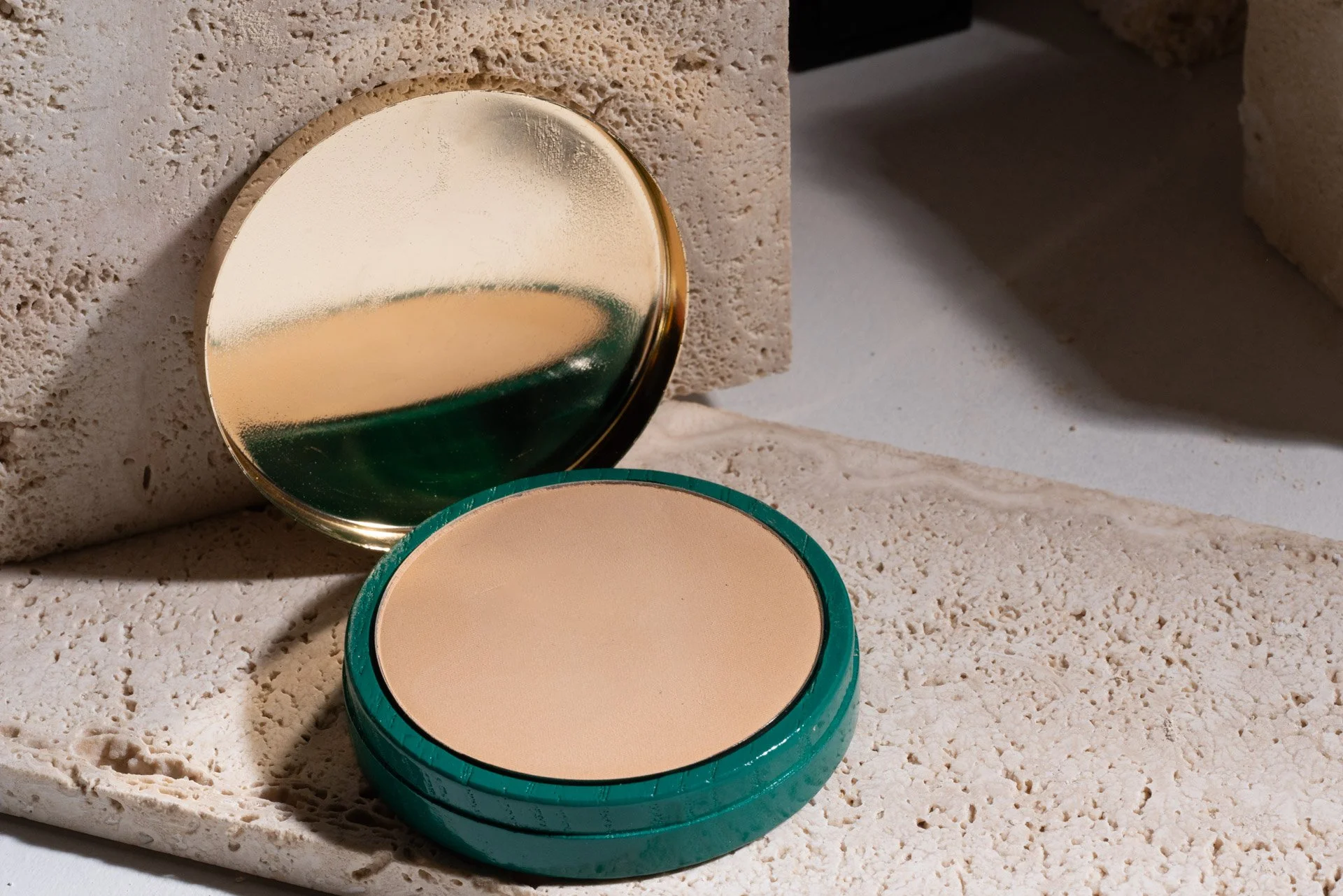
Compact powder is one of the beauty essentials that continues to define everyday routines. This small object combines practicality, performance and aesthetic value in a single format. Used to set makeup, control shine and refine the overall appearance, it has become a constant presence in both personal and professional settings.
The growth of this category reflects its relevance. According to Allied Market Research, the global face compact market was valued at $1.3 billion in 2021 and is projected to reach $2.2 billion by 2031, representing a steady annual growth rate of 5.7%. As demand increases, so do expectations, not only in terms of product performance, but also in terms of how these products are designed, produced and perceived.
In this context, packaging plays a central role. Compact formats are among the most complex types of cosmetic packaging, incorporating multiple components such as hinges, mirrors and closures within a limited space while ensuring durability and a premium feel.
At the same time, the growing focus on sustainability is changing the way these systems are developed. Brands are increasingly exploring eco-friendly solutions, driven by a market that is more aware of the materials used, how they are sourced, and the impact of the product's lifecycle.
Designing sustainable compact powder packaging requires a change of perspective. Materials, structure and production processes must be considered as part of an integrated system in which performance, aesthetics and environmental responsibility are developed in parallel.
Why is it so challenging to make sustainable compact powder packaging?
Compact powder packaging is one of the most complex types of cosmetic packaging.
The performance, durability and user experience are closely linked, which makes it hard to simplify the structure.
In this case, sustainability depends on how each component is designed, integrated and managed as part of a complete system. The challenge lies in balancing technical precision with a more responsible approach to materials and lifecycles.
READ ALSO:
Biodegradable cosmetic packaging for skincare products: sustainable alternatives
Packaging for manufacturers: sustainable solutions for the beauty industry
Multi-component structures
Compact powder packaging is inherently multi-layered. A single unit typically includes a base container for the formula, a refill or pan, a mirror, a closure system and, often, hinges or additional internal elements. Each component is designed to perform a specific function, thereby contributing to the product's overall usability and durability.
However, this structural complexity introduces significant sustainability challenges. Different materials are often combined within the same object, including plastics, glass, metal components and adhesives. While these combinations improve performance and user experience, they also make separation more difficult at the end of the product's life.
Material interfaces, bonding techniques, and assembly methods all play a critical role in this process. When components are permanently joined or difficult to disassemble, recycling processes become less efficient and material recovery is reduced.
Designing more sustainable, compact packaging therefore requires a system-level approach in which the number of components, their compatibility and how they interact are carefully evaluated from the outset.
Product protection and compatibility
Compact powders require a stable and controlled environment to maintain their performance over time. The formulation is sensitive to external factors such as exposure to air, humidity and mechanical stress, so the closure system is a critical component of the overall design.
A precise sealing mechanism ensures the powder remains intact during transport and daily use, preventing breakage, contamination or dispersion. At the same time, the packaging must be able to withstand repeated opening and closing without losing alignment or functionality.
Impact resistance also plays a key role. Compact formats are designed to be carried, handled and used frequently, so the structure must be able to absorb shocks while maintaining the integrity of the product and packaging.
These requirements directly influence the selection of materials, their thickness and tolerances, and the assembly process, adding another layer of complexity when integrating sustainability into the design process.
Aesthetic expectations in premium beauty
Compact powder packaging is not only functional, but also highly expressive. It is perceived as a personal item that is often associated with luxury, identity and daily rituals, and its visual and tactile qualities contribute significantly to the overall experience.
Materials and finishes therefore play a central part in shaping this perception. Surface treatments, colour depth, texture and weight all play a role in communicating quality and positioning, particularly in premium and niche segments.
Design decisions are influenced by this expectation at every level. Materials must deliver performance and a refined sensory experience while maintaining consistency throughout the production process. Achieving a balance between aesthetic value and technical feasibility is essential, particularly when integrating sustainable solutions into formats that are expected to feel precise, durable and visually distinctive.
Material strategies for eco-friendly compact powder packaging
Developing such solutions requires a careful balance between material performance, structural precision, and lifecycle considerations. Due to the complexity of the format, materials must be selected for both their environmental profile and their ability to meet strict functional and aesthetic requirements.
Bio-based materials are a particularly promising development in this context, especially when they are derived from secondary resources and engineered to exhibit controlled behaviour over time. Their composition can be tailored to achieve specific properties, such as rigidity, surface quality and resistance to repeated use. This makes them suitable for components that require durability and precision.
Unlike traditional materials, bio-based polymers can be designed with a higher level of integration in mind. Colour can be embedded directly into the material, reducing the need for additional coatings, and surface finishes such as soft-touch effects can be achieved through controlled processing rather than external treatments.
Another key aspect is material optimisation. Reducing thickness and overall mass not only contributes to resource efficiency, but also influences how materials behave after use. A lower material volume can support a more efficient degradation process, ensuring that performance during use aligns with broader lifecycle considerations.
Designing compact packaging with the right partner
Developing eco-friendly compact powder packaging requires the design, engineering and production processes to be aligned into a coherent system.
At mPackting, this approach is at the heart of what we do. We develop comprehensive packaging solutions by combining our knowledge of materials, industrial capabilities and a strong focus on system design. We build each project around specific technical requirements, ensuring that performance, aesthetics and sustainability are integrated from the outset.
Compact formats, with their structural complexity and high performance expectations, benefit from this process. We evaluate material selection, component interaction and production feasibility together, allowing us to develop solutions that are both functional and consistent at scale.
If you are looking to develop new ideas for compact powder packaging, our team can support you in bringing your concept to life.
Contact us at mpackting.com to start your project.
