

Compostable packaging materials are the next sustainable solution for the beauty industry
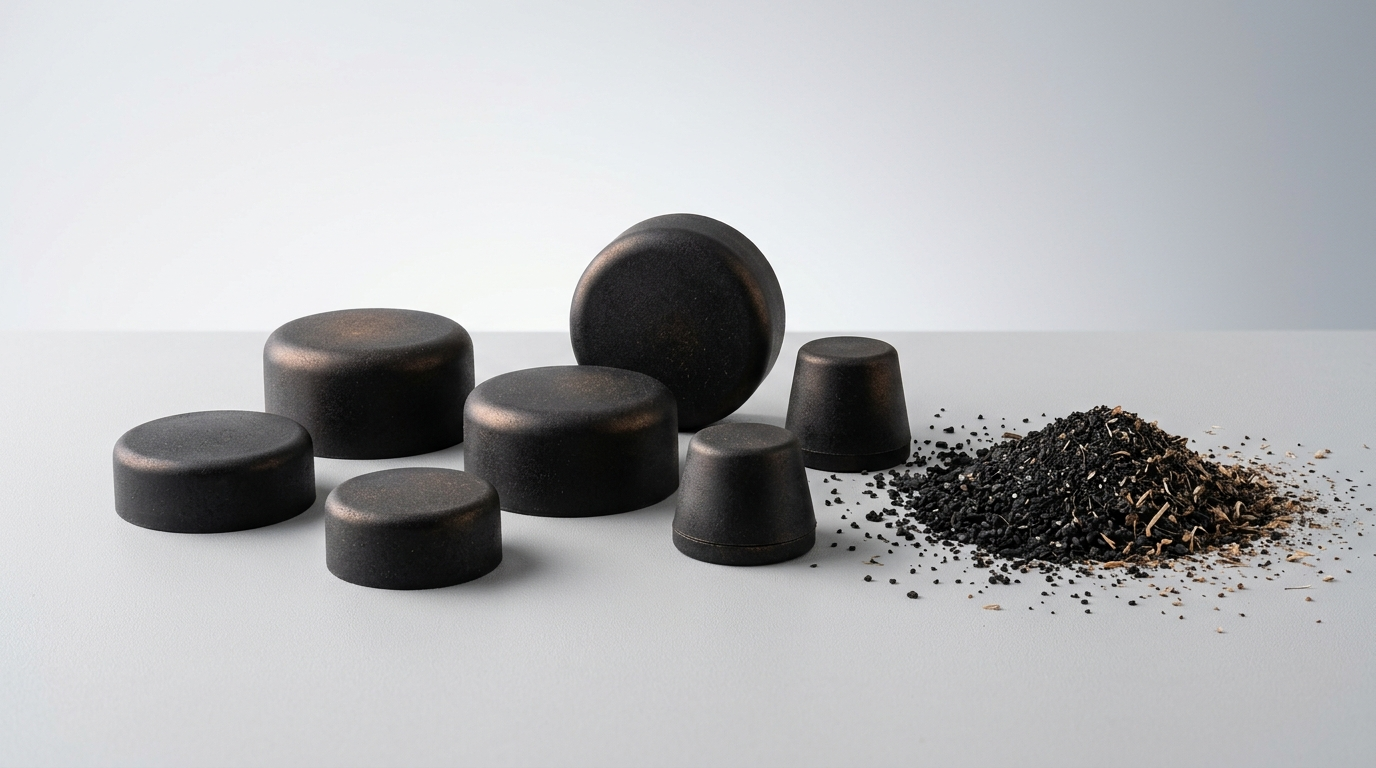
Compostable packaging materials break down under specific, certified conditions into water, carbon dioxide, and biomass, without leaving toxic residue behind. For the beauty industry, that distinction matters more than ever: from 27 September 2026, EU rules on environmental claims require every sustainability term on cosmetic packaging to be substantiated, and “compostable” is one of the few labels with a recognised standard behind it.
Compostable, biodegradable, bio-based: why the terms are not interchangeable
Packaging briefs increasingly list compostable, biodegradable and bio-based as if they described the same thing. They don't, and the difference shapes both material selection and legal exposure.
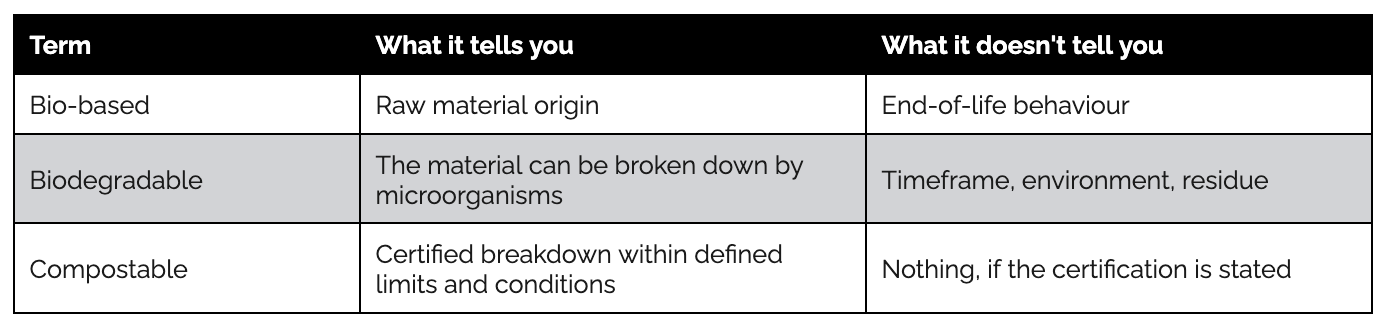
Bio-based describes where a material comes from. It refers to a material produced from renewable biological sources, such as wood or plant fibre, rather than fossil feedstock. It says nothing about how the material behaves at the end of its life.
Biodegradable describes a process, not a result. It means microorganisms can break the material down, but without a defined timeframe or environment, the claim on its own reveals little.
Compostable is the stricter, certified standard. It requires a material to disintegrate and biodegrade within defined limits, under specific composting conditions, without leaving harmful residue.
A material can be bio-based without being compostable, and biodegradable without being compostable. Only compostable comes with a verifiable pass or fail.
What makes a material officially compostable
In the EU, compostability is measured against EN 13432, the standard for packaging recoverable through composting and biodegradation. To meet it, a material must disintegrate into fragments smaller than 2mm within 12 weeks, and at least 90% of it must biodegrade into carbon dioxide within six months, under controlled industrial composting conditions.
That last part is often missed in marketing language. Most compostable materials on the market are certified for industrial composting facilities, not home compost bins. Positioning a material as compostable without specifying the required conditions is exactly the kind of vague claim EU regulators are now targeting.
Why beauty brands are moving toward compostable packaging
Two forces are converging on the same conclusion.
Consumer expectations are shifting. According to McKinsey research, 44% of consumers consider environmental impact very important when evaluating packaging, and half say they're willing to pay a premium for more sustainable options. For premium and luxury beauty brands, packaging is no longer separate from the sustainability story: it's part of it.
Regulation is tightening the definition of a credible claim. The EU's Empowering Consumers for the Green Transition Directive enters into application on 27 September 2026, restricting the use of generic environmental terms unless they're backed by recognised standards. Alongside the Packaging and Packaging Waste Regulation, it pushes brands toward claims that can be proven, not just implied. A material certified to EN 13432 gives a brand exactly that: a defensible answer to “what happens to this packaging after use.”
This is also why compostable materials are gaining ground over broader, less specific biodegradable claims. Compostability answers a question regulators, retailers and consumers are all starting to ask in the same terms.
From wood waste to compostable material: the mBlack™ approach
Material innovation in this space rarely starts with a lab experiment; it starts with what's already being thrown away. That's the logic behind mBlack™, mPackting's proprietary material developed within Minelli Group.
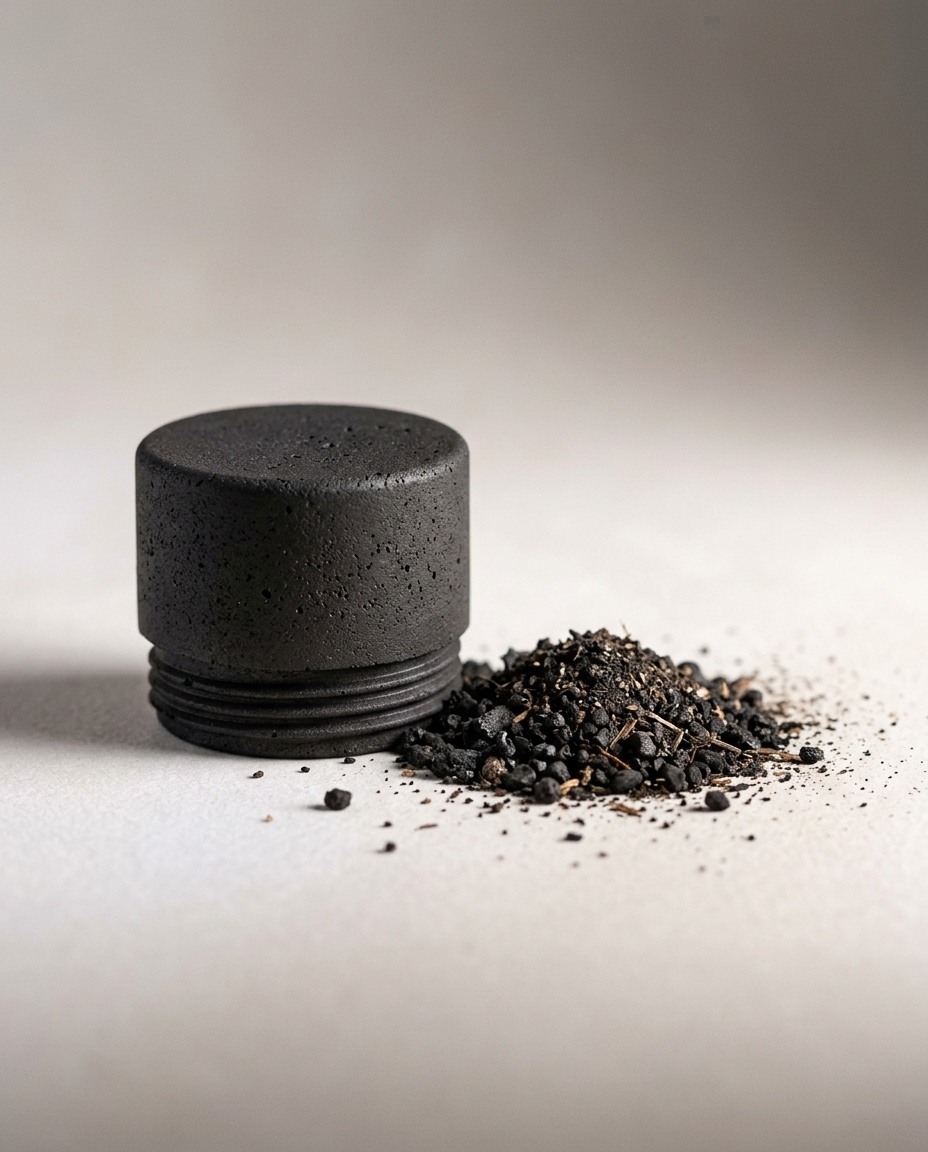
The process begins with wood offcuts generated during production, material that would otherwise be treated as waste. Rather than sending it to landfill, mPackting upcycles it into biochar, a process that permanently traps the CO2 the tree absorbed during its growth. That biochar becomes the base for mBlack™: a bio-based, compostable material shaped through standard injection moulding into caps, closures and other cosmetic packaging components.
At end of life, packaging made from mBlack™ is designed to break down without releasing microplastics or harmful substances, returning biochar to the soil rather than waste to a landfill. It's an example of what a genuinely closed loop looks like when the raw material and the end-of-life outcome are designed together, rather than added as an afterthought.
The same logic runs through mPackting's Rivulet collection, where third-generation traceless biopolymers, also upcycled from wood processing residues, pair with PCR glass to extend the same principle across a full packaging system.
What to consider before choosing compostable packaging for cosmetics
Compostable is not a universal answer, and treating it as one is where brands run into trouble. A few questions are worth answering before specifying it:
Where will it actually be composted? If a material is only certified for industrial composting and the target market has limited access to industrial facilities, the environmental benefit doesn't materialise in practice.
Does it protect the product? Compostable materials need to meet the same barrier, durability and shelf-life requirements as any other packaging component, particularly for primary packaging in contact with formulas.
Can the claim be substantiated on the same page it's made? Under the new EU rules, a compostable claim needs to be accurate, specific and backed by the same evidence wherever it appears, from the cap itself to the product page.
Does it fit the collection's design language? Sustainable materials increasingly need to hold their own aesthetically. FSC-certified wood, mBlack™ and biopolymers can be developed around a brand's existing visual identity rather than replacing it.
Domande frequenti
What's the difference between compostable and biodegradable packaging?
Biodegradable means a material can be broken down by microorganisms, without a defined timeframe or environment. Compostable is a certified standard, requiring the material to disintegrate and biodegrade within specific limits under controlled composting conditions.
What standard defines compostable packaging in Europe?
EN 13432 is the reference standard in the EU. It requires at least 90% disintegration into fragments under 2mm within 12 weeks, and at least 90% biodegradation into carbon dioxide within six months, under industrial composting conditions.
Is compostable packaging suitable for cosmetics and skincare?
Yes, when the material is developed to meet the same protection, durability and finish requirements as conventional packaging. Wood-based components, biopolymers and materials like mBlack™ are already used across skincare, fragrance and home fragrance packaging.
Can compostable packaging be recycled instead?
Generally not through standard recycling streams. Compostable materials are designed to break down biologically, so they should be disposed of through composting rather than mixed with recyclable plastics, paper or glass.
Choosing packaging that's built to disappear responsibly
Compostable packaging materials give beauty brands something increasingly rare: a sustainability claim that can actually be proven. As EU rules tighten around what “sustainable” is allowed to mean, working with materials certified against a recognised standard, and understanding exactly how they behave at end of life, becomes part of good packaging design, not an add-on to it.
mPackting develops compostable and bio-based materials, including mBlack™, engineered from upcycled wood waste for premium cosmetic packaging. Discover mPackting's sustainable materials.
