

Refillable makeup containers: an eco-friendly trend revolutionizing cosmetics
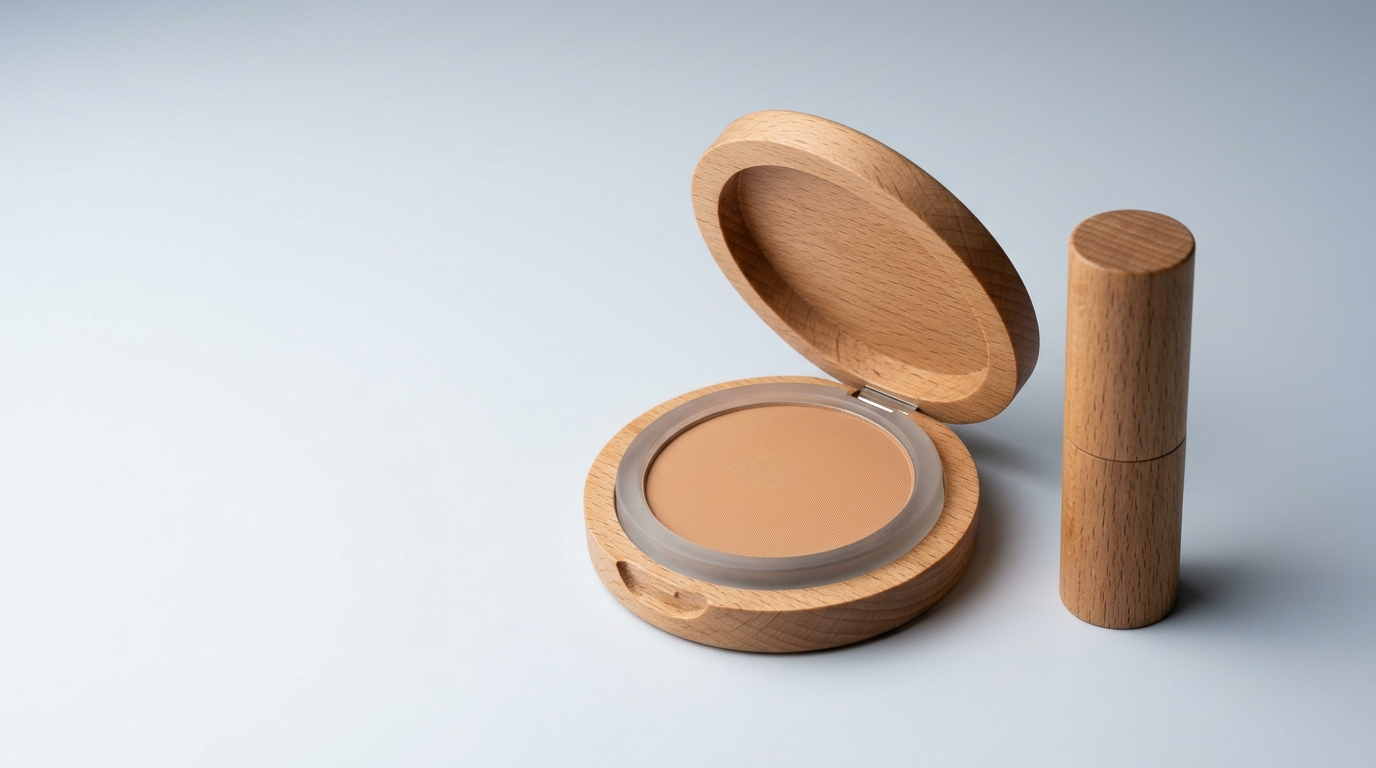
Refillable makeup containers let consumers keep a single outer case and replace only the product inside. The format is no longer a niche gesture: the global refillable beauty packaging market is expected to be valued at $5.7 billion in 2026 and reach $9.0 billion by 2033, growing at a 6.8% CAGR.
What are refillable makeup containers?
A refillable makeup container separates two elements that used to be manufactured, sold and discarded as one piece: the outer case and the product cartridge. The case is built to last, in materials such as wood, aluminum or durable glass. The cartridge, pod or pan holds the formula and is replaced once it runs out.
This applies across categories. Lipsticks keep their casing and swap the bullet. Compacts retain the shell and replace the pressed powder pan. Foundation moves from single-use bottles to glass containers with refill pumps.
Why the shift is accelerating
Regulation. The EU's Single-Use Plastics Directive and the incoming Packaging and Packaging Waste Regulation (PPWR) are tightening requirements on recyclability, material efficiency and reuse across every packaging category placed on the EU market, cosmetics included.
Consumer demand. A 2024 NielsenIQ survey found that 65% of global beauty consumers are willing to pay a premium for sustainable packaging. Preference is shifting from recyclable-and-discarded to genuinely reusable.
Category performance. Makeup packaging is expected to be the fastest-growing application segment in refillable beauty packaging. UK sales of refillable beauty products grew 47% between January and July 2022, with makeup refills alone surging by 364%.
Europe leads adoption. Europe is expected to hold 38% of the global refillable beauty packaging market in 2026, supported by regulatory pressure and established sustainability standards.
The main refillable formats
Refillable systems now cover most makeup categories:
Lipstick and lip color — outer case retained, bullet or cartridge replaced
Pressed powders and compacts — shell kept, pan swapped
Foundation and liquid formulas — glass bottle with a replaceable pump cartridge
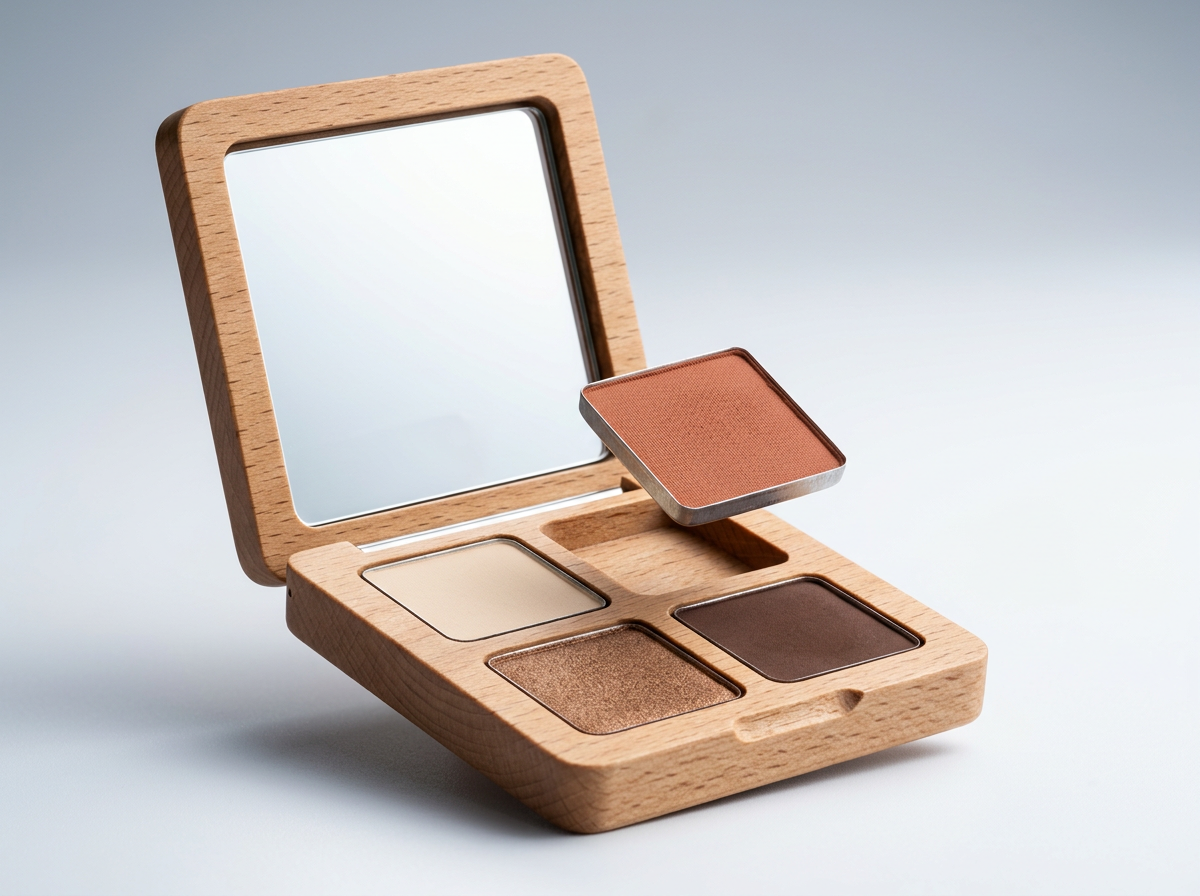
Blush and bronzer — same mechanism as pressed powders, growing fastest within color cosmetics
Each format asks a different question of the packaging system: how the closure seals, how the refill locks into place and how many refill cycles the case can support before wear becomes visible.
Materials shaping refillable design
Material choice determines whether a refillable system actually gets refilled. A case that scratches, discolors or loses its seal after two cycles undermines the entire premise.
Wood brings durability and a tactile identity that ages well, which matters for a component designed to be handled for years rather than weeks. FSC-certified beech wood, in particular, combines structural stability with a warmer material language than metal or plastic.
Glass protects formula integrity and pairs naturally with wood in dual-material systems.
Aluminum stays common for compacts and lipstick cases, valued for its light weight and recyclability.
Closure engineering is where refillable systems succeed or fail. A closure needs to seat precisely and repeatedly, which is why solutions that integrate the thread directly into the material, without a separate plastic insert, are gaining ground over standard catalogue components.
Benefits for brands and consumers
Refillable packaging changes the relationship between a brand and its packaging cost structure, not just its environmental footprint.
Lower material use over time. One case can support multiple refill cycles, reducing the volume of packaging produced per unit sold.
Stronger customer retention. A refill purchase is a repeat touchpoint, often built into subscription or direct-to-consumer models.
Premium positioning. A well-made case functions as a keepsake object rather than disposable packaging, supporting a higher price point.
Regulatory readiness. Brands that design for reuse now are better positioned as PPWR requirements phase in through 2030.
What still needs solving
Refillable systems are not friction-free. Three issues come up consistently in the transition.
Hygiene perception. Some consumers remain skeptical about reinserting a fresh cartridge into a used case, particularly for skin-contact products. Clear refill instructions and airtight seal design address this directly.
Refill logistics. Refills need to reach the consumer, whether through retail restocking, refill stations or mail. This adds a supply chain layer that single-use packaging never required.
Tooling investment. Developing a refillable system, particularly one with a custom closure, requires upfront tooling cost that a standard cap does not. Brands weigh this against the long-term material savings and regulatory alignment it delivers.
Frequently asked questions
What is refillable makeup packaging?
Refillable makeup packaging separates the outer case, designed to be kept and reused, from the product itself, which is replaced through a cartridge, pod or pan once it runs out.
Are refillable containers more sustainable than recyclable ones?
Refillable systems reduce the volume of packaging produced per unit over time, since one case supports multiple refill cycles. Recyclable packaging still requires a new unit at every purchase.
What materials work best for refillable makeup packaging?
Wood and durable glass hold up well across repeated cycles and keep their appearance over time. Aluminum remains common for compacts and lipstick cases due to its light weight and recyclability.
Do refillable systems cost more for brands to develop?
Yes, upfront tooling is typically higher than for a standard single-use cap or case. Brands offset this against lower packaging volume over time and closer alignment with incoming EU packaging regulation.
Which makeup categories are adopting refillable formats fastest?
Color cosmetics, particularly lip products, pressed powders, blush and bronzer, show the strongest shift toward refillable formats, alongside foundation moving into refillable glass and pump systems.
Designing for a packaging model built to last
The shift toward refillable makeup containers is a material and engineering question before it is a marketing one. A case built to be reused for years needs to perform like a durable object, not a temporary shell.
Discover mPackting's approach to custom, wood-based closure systems at mpackting.com.
