

Creative zero-waste packaging ideas to inspire sustainable cosmetic brands
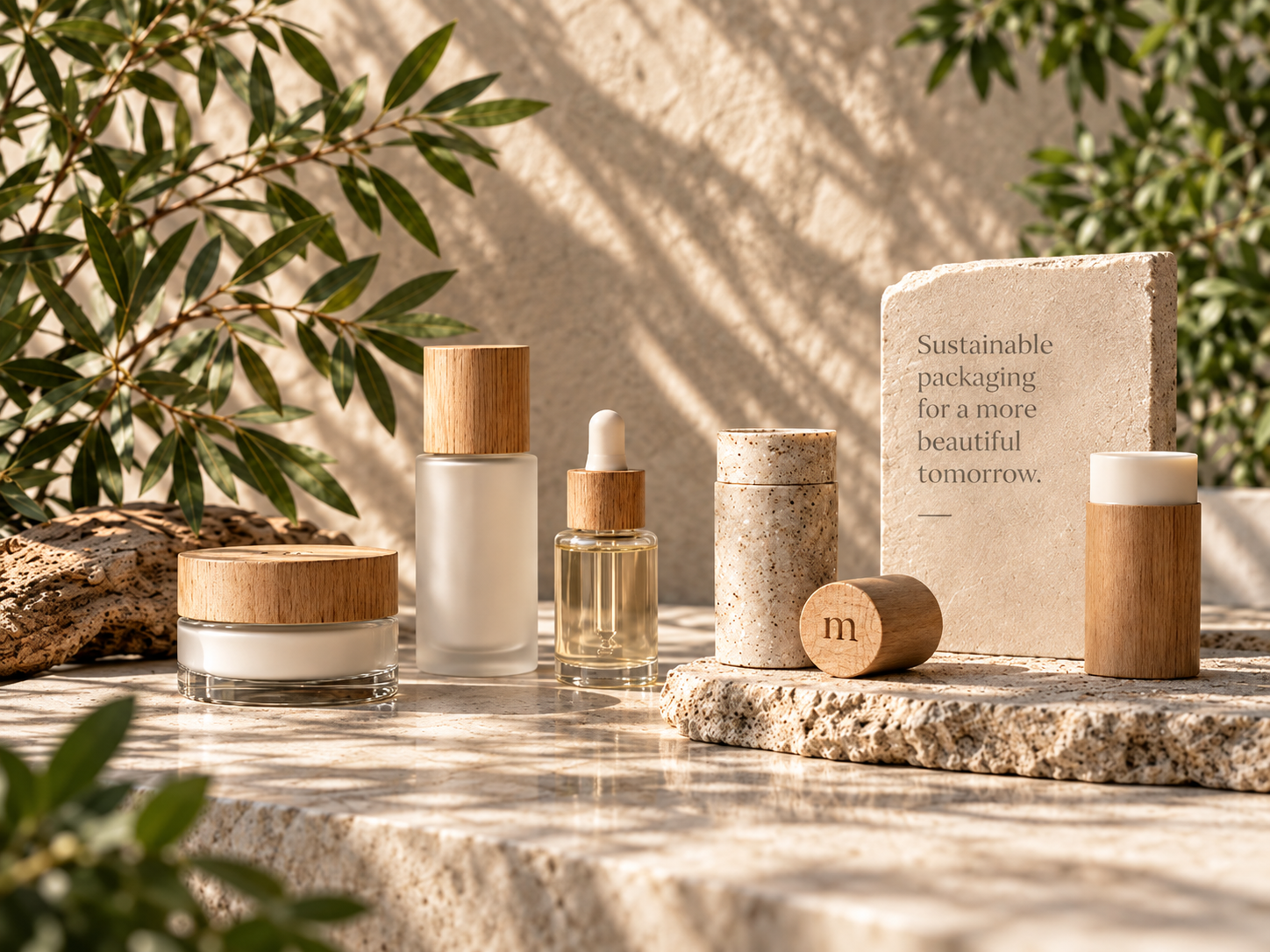
Zero waste packaging ideas for cosmetic brands center on removing waste at the source: mono-material closures, refillable systems, waterless formats and compostable materials that eliminate the need for a package to have a second life in a landfill. The approach that works in practice combines material choice with product design, not a single swap.
What zero waste packaging means for cosmetic brands
A package qualifies as zero waste when none of its components end up as landfill or unrecoverable waste after use. That standard rules out most mixed-material packaging, where a plastic pump, a metal spring and a glass body cannot be separated for recycling.
The scale of the problem is what makes this a design priority rather than a marketing choice. The cosmetics industry produces roughly 120 billion units of packaging every year, and an estimated 70% of it ends up in landfill. Most of that volume comes from packaging built to be discarded after a single use.
Idea 1 — Mono-material wood and biopolymer closures
A closure built from a single material can be recycled or composted without disassembly. Standard plastic caps typically combine a polymer shell with a separate rubber or foam liner, which forces the two materials apart before either can be processed.
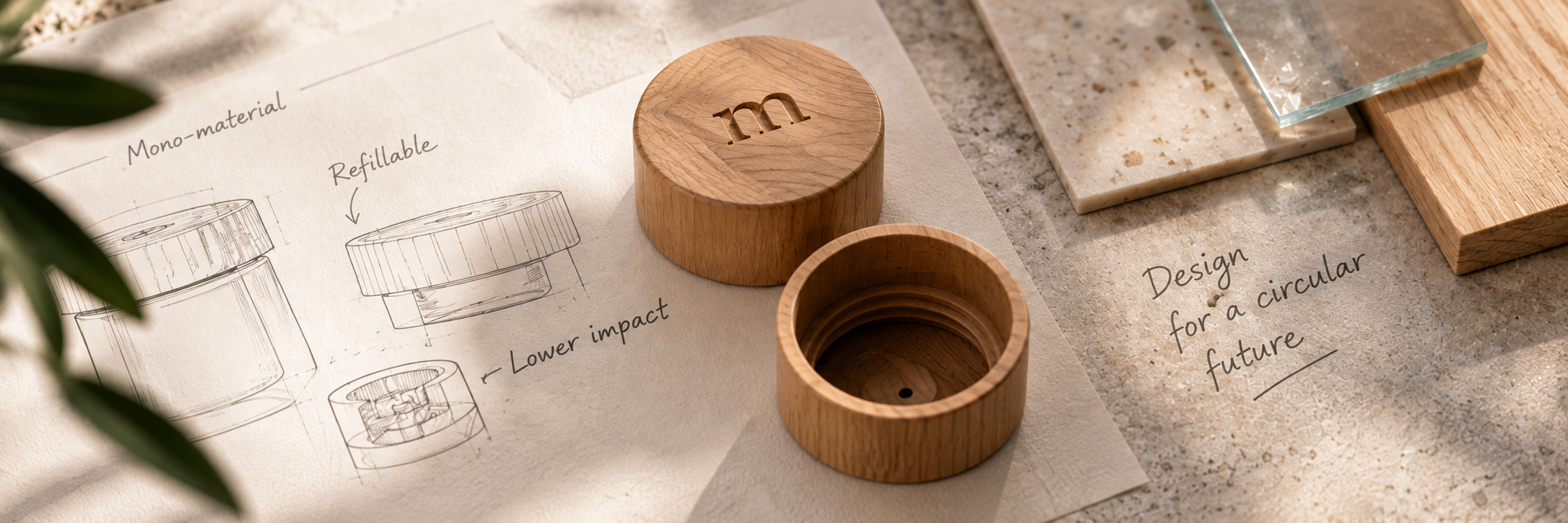
Thread-integrated wood closures remove that problem by cutting the screw thread directly into the wood itself, eliminating the internal plastic insert that most catalogue closures rely on for grip. The result is a cap made of one material from surface to seal, which simplifies both its manufacturing and its end of life.
Idea 2 — Refillable systems that cut repeat packaging
Refillable systems separate a durable outer case from a replaceable refill, so the packaging a customer keeps is built to last years rather than weeks. Luxury indie brands have used this model for some time: a permanent compact or lipstick case is purchased once, and only a minimally packaged refill pan is replaced when the product runs out.
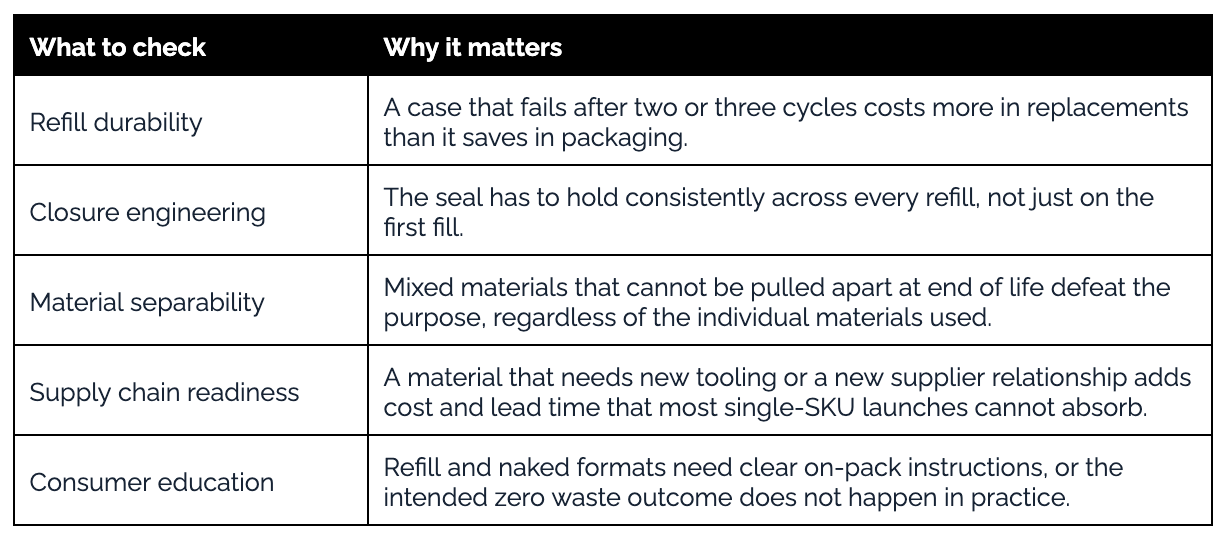
The design constraint is durability. A case that scratches, discolors or loses its seal after two refill cycles defeats the purpose, which is why closure engineering and material hardness matter as much as the refill mechanism itself.
Refill logistics is the part brands underestimate. A refill has to reach the customer through retail restocking, a refill station or mail, which adds a supply chain step that single-use packaging never required. Brands that plan this distribution layer before launch avoid the most common reason refill programs stall after a strong first quarter.
Idea 3 — Compostable, biochar-based materials
Biopolymers derived from biochar, a byproduct of wood processing, offer a compostable alternative to standard plastics while remaining compatible with existing injection moulding infrastructure. That compatibility matters commercially: a material that requires new tooling adds cost most brands cannot absorb on a single SKU.
These materials are compostable, not simply plastic-free branding.
Idea 4 — Mono-material glass-and-wood pairing for easier recycling
Glass and wood separate cleanly at end of life, which makes dual-material systems easier to recycle than glass paired with plastic components. Premium skincare and fragrance lines increasingly pair frosted glass bodies with FSC-certified wood closures, to keep both materials genuinely recoverable rather than fused into a single non-recyclable unit.
The pairing also holds up visually over a product's full refill life, which matters for a case designed to be kept rather than replaced. Frosted glass resists scratching better than clear glass, and wood ages instead of degrading, so the object still looks intentional after a dozen refills rather than worn out.
Idea 5 — Naked and minimal secondary packaging
Secondary packaging, the outer box, the insert, the cellophane wrap, often outweighs the product it protects. Removing or minimizing it is one of the fastest wins available, and one of the least expensive to implement.
Drop the outer box for products that ship in their own durable case
Replace foam or plastic inserts with molded pulp or recycled cardboard
Size the box to the product instead of a standard catalogue dimension, which also cuts shipping volume
How to evaluate a zero waste idea before adopting it
Not every zero waste format fits every product. Before committing to a new packaging system, brands should test it against a short set of practical questions.
Domande frequenti
What does zero waste packaging mean in cosmetics?
Zero waste packaging in cosmetics means a package designed so no part of it becomes landfill waste after one use. In practice this means mono-material construction, refillable systems, or materials that fully compost or biodegrade at end of life.
Is refillable packaging the same as zero waste packaging?
Not always. Refillable packaging reduces waste by extending the life of the outer case, but the refill pod itself must also be low-waste or compostable for the full system to qualify as zero waste.
What materials are used in zero waste cosmetic packaging?
Common choices include FSC-certified wood, biochar-based biopolymers, mono-material glass, aluminum and compostable fiber. The common thread is that each material can be separated, recycled or composted without mixed-material contamination.
Can zero waste packaging work for premium and luxury cosmetic brands?
Yes. Wood closures, dual-material glass-and-wood systems and refillable compacts are already standard in premium skincare and fragrance lines, where the case itself doubles as a keepsake object rather than disposable packaging.
How do brands start transitioning to zero waste packaging?
Most brands start with one SKU: a hero product moved to a refillable or mono-material format. Testing closure durability and refill logistics on a single line limits risk before a wider rollout.
Where to start
Zero waste packaging is not one material or one format. It is a design constraint applied consistently, from closure to case to secondary packaging, so that no part of the system is built to be thrown away.
Most brands do not redesign an entire line at once. Picking one SKU, testing the checklist above against it, and measuring how customers actually use the refill or the naked format gives a brand real data before scaling the idea across a full collection.
Related reading: Refillable makeup containers: an eco-friendly trend revolutionizing cosmetics covers refill systems in more depth.
Discover mPackting's materials and innovative closure systems.
