

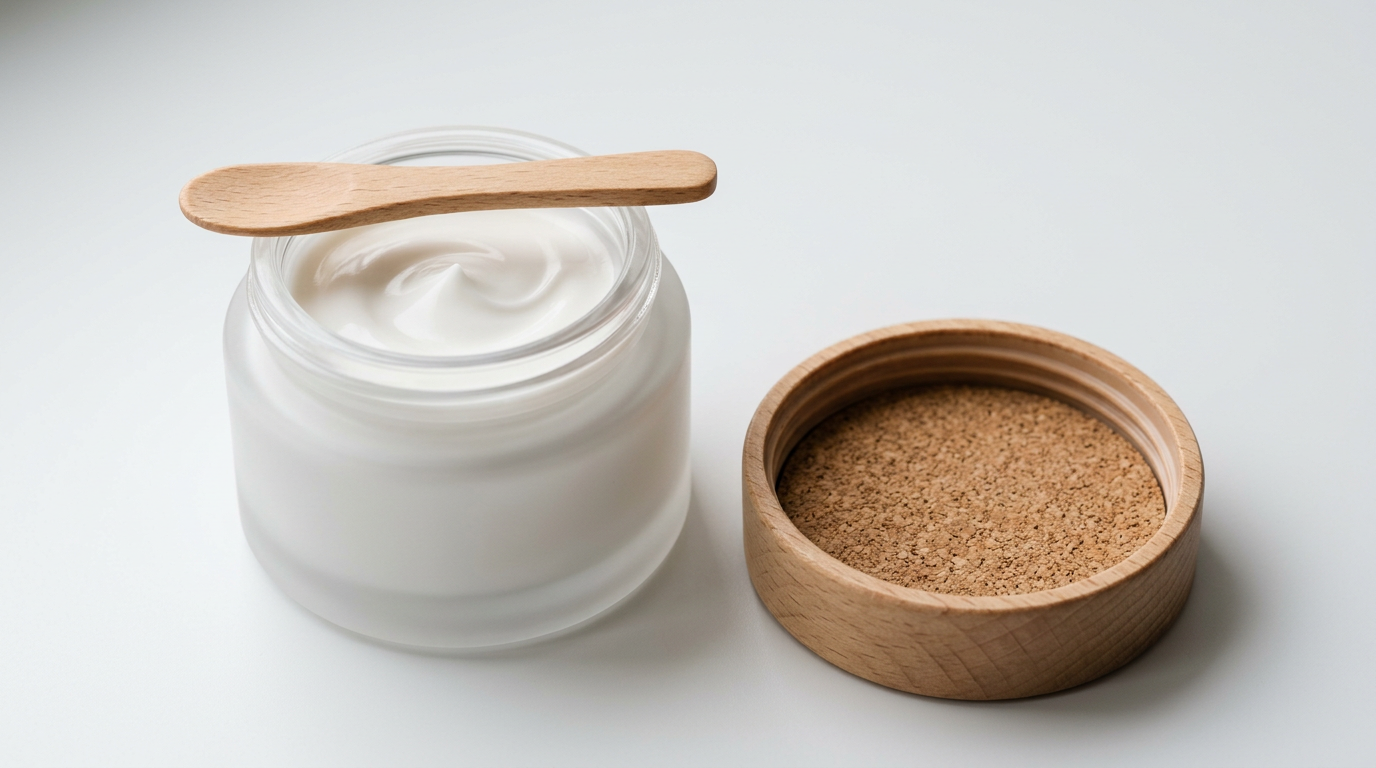
To choose a cosmetic jar for creams, match four things to your formula: the jar material, the size and opening, the lid with its seal, and the protection the pack gives against light and air. Then test the real jar and the real lid with your real formula before the first order, because most problems appear only in that combination.
How to choose a cosmetic jar for creams: the short answer
A cream jar looks simple, but it is a small system: a container, a lid, usually an inner seal, and a formula that reacts to all three. Brands that treat it as a catalogue decision tend to find the problems late, when the first batch is already filled.
How to choose a cosmetic jar for creams comes down to one sequence, and it works from the formula outward. Each step narrows the options, so that by the end the choice is mostly made.
Start with the formula: cream jar or lotion jars?
Jars suit products thick enough to be scooped: face creams, rich moisturisers, balms, body butters and masks. A fluid lotion is a different matter. It pours, drips and is hard to take out of a wide opening cleanly, so lotion jars only make sense for thick, whipped or butter-like lotions. Fluid lotions are better served by a bottle with a pump.
Three properties of the formula steer the rest of the choice. Viscosity decides the opening. Water and oil content decide which materials the formula can touch. Sensitive actives, such as vitamin C or retinol, decide how much light and air the pack has to keep out.
Choose the jar material
Three materials cover most cream jars. The table compares what each one offers and what to check.
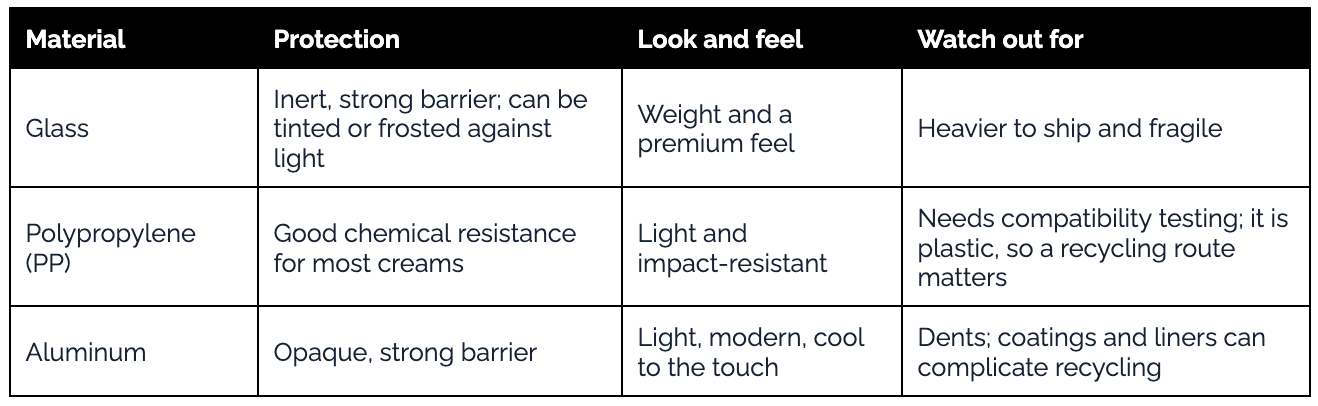
Glass is the usual choice for brands that want a premium look and broad compatibility with formulas. mPackting works with specialist glassmakers such as Estal and designs and customises the closures and finishes that go with them. Each collection pairs a closure with several glass options, and some colours correspond to different glass types, such as recycled PCR glass, so a brand can choose the glass for its formula and its look.
Pick the size and the opening
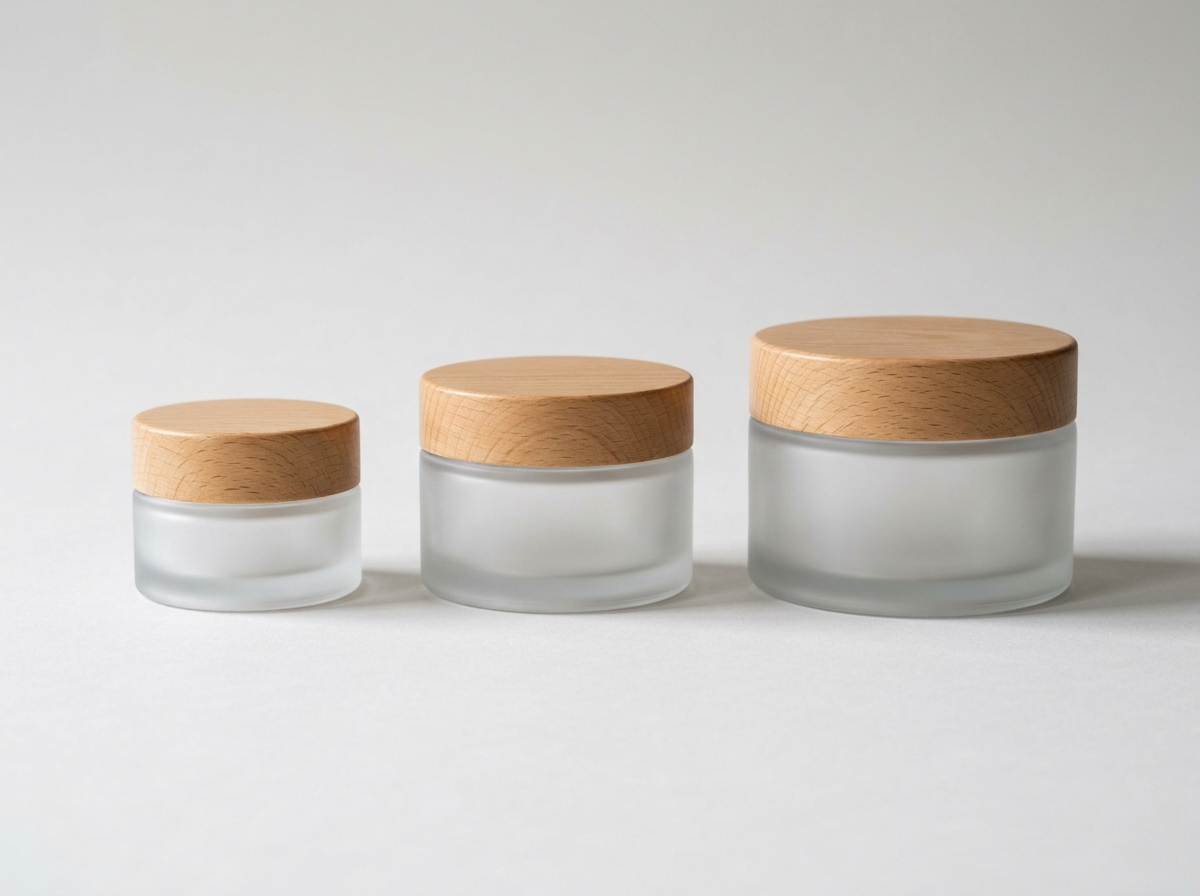
For a cream jar, choose the capacity from how the product is used, not only from the price point. As typical ranges, eye creams sit around 5 to 15 ml, face creams around 30 to 60 ml, and body butters from about 100 ml upwards. A jar that is too large for the dose stays open for months and exposes the formula to air again and again. One that is too small raises the cost per millilitre and has to be refilled or replaced too often.
The opening follows the viscosity. Thick creams need a wide mouth, so that a finger or a spatula reaches the product. Every opening exposes the formula to air, and fingers add a contamination risk. A small spatula in the pack, or a pump for the most sensitive formulas, addresses both.
Cosmetic jars with lids: what to look for
With cosmetic jars with lids, the lid is where most problems start. Four points matter.
Neck finish. The thread of the lid has to match the thread of the jar exactly. A mismatch gives a lid that wobbles, leaks or never seals properly, and it is easy to miss on a sample.
Inner seal or liner. A disc or gasket inside the lid compresses against the rim and closes the pack. It decides whether the jar is airtight, so specify it instead of leaving it to default.
Closure type. Screw lids give a firmer, repeatable seal for creams than snap-on lids, and they survive many openings.
Material and finish. Wood, aluminum, a bio-based composite or plastic: the lid material sets the look and the feel in the hand, and its finish and colour make the brand recognisable.
This is the part mPackting designs. Its closures are customisable by assembly system, wood type, shape, finish, colour and varnish, so a brand can start from a collection and make the lid its own. The assembly systems use glue-free inserts, which keep the lid mechanically secure without adhesive. The custom solutions service covers projects that need more than a collection offers.
Protect the formula: light, air, and contamination
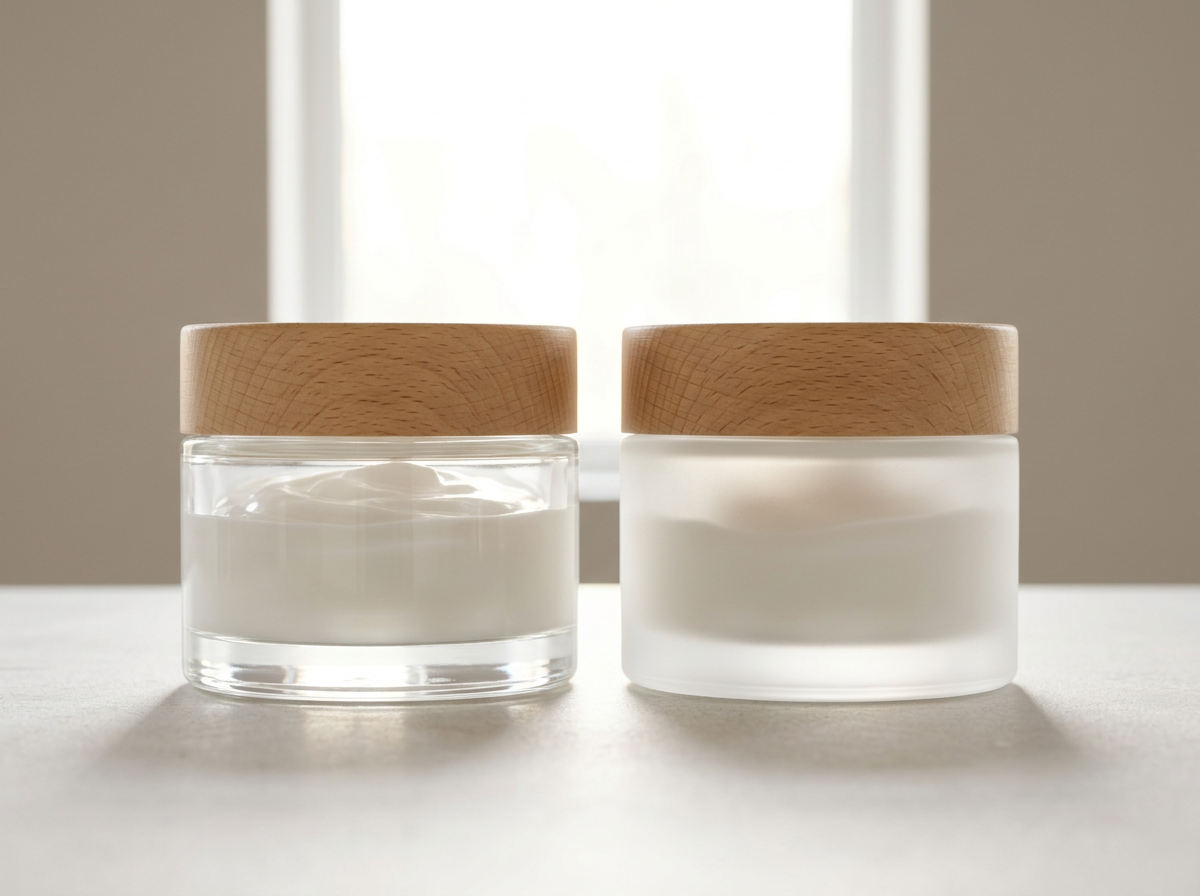
Light. Tinted, frosted, or opaque glass lowers exposure. A clear jar on a bright shelf is a poor match for a light-sensitive formula.
Air. Each opening lets air in. An inner seal and a well-fitting lid reduce it. For highly sensitive formulas, an airless pump may suit better than any jar.
Contamination. A spatula keeps fingers out of the product, and a wide mouth that is easy to clean helps hygiene.
If the formula is very sensitive, it is better to admit that a jar is not the right format than to force it.
Make the jar easier to recycle
A jar is easiest to recycle when its parts can be separated. A glass body, a lid made of one material and an inner seal that can be removed make a simpler stream than glued liners or hidden inserts. The guide to recyclable skincare packaging covers this in detail.
Regulation is moving the same way. The EU packaging regulation requires all packaging to be recyclable by 1 January 2030 and the mPackting article on the PPWR in cosmetic packaging explains the timeline.
Describe the jar precisely. Since 27 September 2026, Directive (EU) 2024/825 prohibits generic environmental claims without proof, and terms such as "green" and "ecological" are among the examples. "FSC-certified beech wood lid with a glue-free insert" says more, and risks less, than "eco jar".
Test before you order
Test the actual jar and the actual lid with the actual formula, together. Samples of each part on its own prove very little. A useful first round covers four checks.
Seal. Close the jar and turn it upside down, then repeat after exposure to warm and cold conditions.
Stability. Watch colour, smell and texture over time, in the jar and under the lid.
Interaction. Check how the formula behaves against the seal, the liner and any plastic parts.
Shipping. Run drop and vibration tests on the filled jar in its outer packaging.
Ask about minimum quantities and lead times before you approve a design, because both decide what is realistic for a launch.
Questions to ask your supplier
Which neck finish does the jar use, and does the lid match it exactly?
What is the inner seal made of, and is it compatible with my formula?
Can I get samples of the jar and the lid together?
Which materials, finishes and colours can the lid have, and what can be customised?
What are the minimum quantities and the lead times?
Which documents do you provide on material composition and weight?
Frequently asked questions
What is the best jar for face cream?
There is no single best jar. For most face creams, a glass jar with a wide mouth, a well-fitting lid and an inner seal is a safe starting point, adjusted for light sensitivity and budget.
Are glass or plastic jars better for creams?
Glass is inert and protects well, with a premium feel and more weight. Polypropylene is lighter and impact-resistant, and needs compatibility testing with the formula. The choice depends on the formula, the positioning and the shipping.
What size jar do I need for a face cream?
Face creams typically sit in the 30 to 60 ml range, eye creams around 5 to 15 ml and body butters from about 100 ml upwards. Choose the size from the dose and the time it takes to finish the jar, so the formula is used before it degrades.
Why does a cosmetic jar need an inner liner?
The liner presses against the rim to close the pack, limiting air and leakage. It is a key part of the seal, so it should be specified and tested together with the formula.
Can I use lotion jars for a fluid lotion?
Only for thick, whipped or butter-like lotions. Fluid lotions are hard to take out of a wide opening, so a bottle with a pump is usually the better format.
Where to start
Choosing a cosmetic jar for creams is a sequence, not a single decision: formula first, then material, size, lid, protection and testing. A new brand does not need to design every part from scratch.
Contact us to find the collection that fits your cream and your dreams!
