

How sustainable packaging fits into a circular economy for cosmetic brands
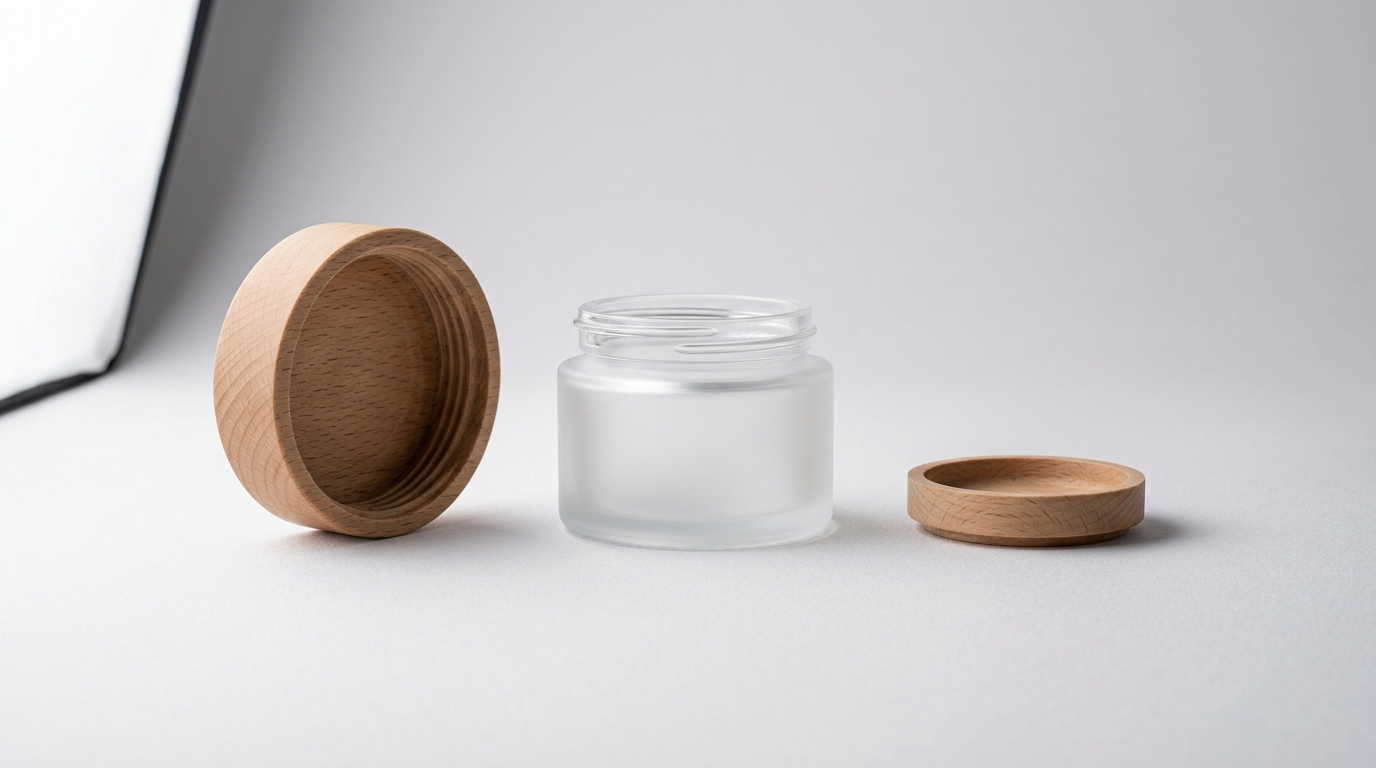
Sustainable packaging in a circular economy is designed so its materials stay in use after the product is finished: refilled, recycled or returned to the soil, rather than discarded. For a cosmetic brand, that means treating end of life as a design requirement from the first sketch, not as a claim added at launch.
What sustainable packaging in a circular economy means for cosmetics
A linear model makes a container, uses it once, and throws it away. A circular model keeps the material in use for as long as possible and designs the waste out before it exists. The change is less about a new material than about a new question: what happens to this jar when the cream is gone?
That question has to be answered at the design stage. Sustainable packaging in a circular economy cannot be added afterwards: a package that cannot be separated, sorted or composted will not be circular, whatever its label says.
Why cosmetic packaging struggles to be circular
Cosmetic packaging is small, complex and rarely made of a single material. A pump combines a plastic body, a metal spring and a gasket. A jar may pair glass with a plastic liner and a glued label. The small multi-material parts that make a product comfortable to use can get in the way of recycling.
The variety of designs and of product left inside adds further friction. The authors of a 2025 dataset, built from about 270 kg of cosmetics and personal hygiene packaging returned through a retail take-back system in Denmark, note that detailed public data on how this packaging is designed is still scarce. Brands are working with limited information, which makes design choices harder to defend.
No single fix closes the gap. Sustainable packaging in a circular economy comes down to four strategies, applied in order.
Four circular strategies for cosmetic brands
Avoid and reduce
Circular thinking ranks avoiding waste above recycling it. In practice, that means fewer components, thinner walls where function allows, and no outer box that adds weight without protecting the product. Every part removed is a part that never needs a second life.
Reuse and refill
A durable outer case paired with a replaceable refill keeps the heaviest part of the package in use for years. It only works if the case is built to last: a material that scratches, loosens or loses its seal after a few cycles ends up in the bin anyway. Wood, glass and metal suit this role. mPackting's article on refillable packaging looks at the engineering in more depth.
Recycle
Recycling works when a package is made of one material, or can be taken apart into single-material pieces. We should then design packaging that is not only recyclable but compatible with current recycling technologies. The mPackting guide to recyclable skincare packaging covers the material side.
Regenerate
Where material cannot stay in use indefinitely, the loop closes through renewable or bio-based inputs and a safe end of life. FSC-certified wood comes from managed forests. mBlack™, mPackting's composite of biochar and biopolymer, is shaped by standard injection moulding. For compostable materials, the claim only holds if a disposal route exists, so instructions on the pack matter as much as the material.
Materials in the loop
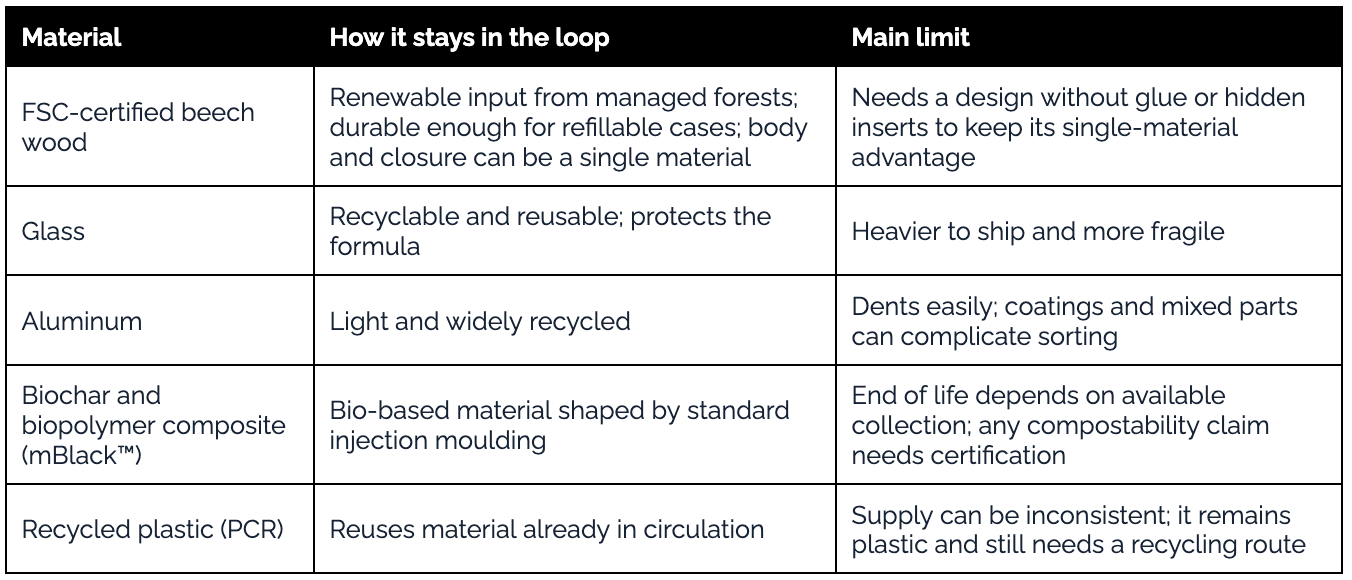
Each material enters the loop differently, and each carries a limit. The table summarises the main options. The full range is described on the mPackting materials page.
Design for disassembly: glue-free, separable, mono-material
Circularity is decided at the joints. A single-material body fitted with a closure glued in place, or with a hidden plastic insert, cannot be recycled as one stream, however good each part is on its own.
Cutting the thread directly into the closure material removes the insert. Fitting components by mechanical assembly instead of adhesive lets them come apart by hand or on a sorting line. mPackting builds its patented assembly systems on this principle: glue-free, mono-material and designed to be separated.
The same logic applies to decoration. Printed labels, metallic coatings and mixed-material finishes can undo the work done on the structure, so they are decided together with the structure, not after it.
How regulation is pushing circularity
Regulation (EU) 2025/40, the Packaging and Packaging Waste Regulation, entered into force on 11 February 2025 and has applied since 12 August 2026. It requires all packaging to be recyclable by 1 January 2030, and sets Member State targets to cut packaging waste by 5% by 2030, 10% by 2035 and 15% by 2040, compared with 2018.
Recyclability is graded A, B or C, and packaging below 70% recyclability does not count as recyclable. The binding reuse quotas focus on categories such as transport and beverage packaging, so cosmetic primary packaging is not directly bound by them. The recyclability rule is broader. mPackting's explainer on the PPWR in cosmetic packaging goes through what changes for brands.
Measuring circularity and avoiding greenwashing
A circular claim is only as strong as the evidence behind it. A life cycle assessment, a recognised certification such as FSC and a recyclability grade give a brand something to point to. Vague wording does the opposite.
Since 27 September 2026, Directive (EU) 2024/825 prohibits generic environmental claims made without proof of recognised excellent environmental performance. Examples of claims at risk include terms such as "green", "ecological" and "biodegradable". The rules cover consumer-facing communication, which is where packaging claims end up.
The safer route is to say what the material is and where it goes. "FSC-certified beech wood closure, separable from the glass body" says more, and risks less, than "eco-friendly packaging".
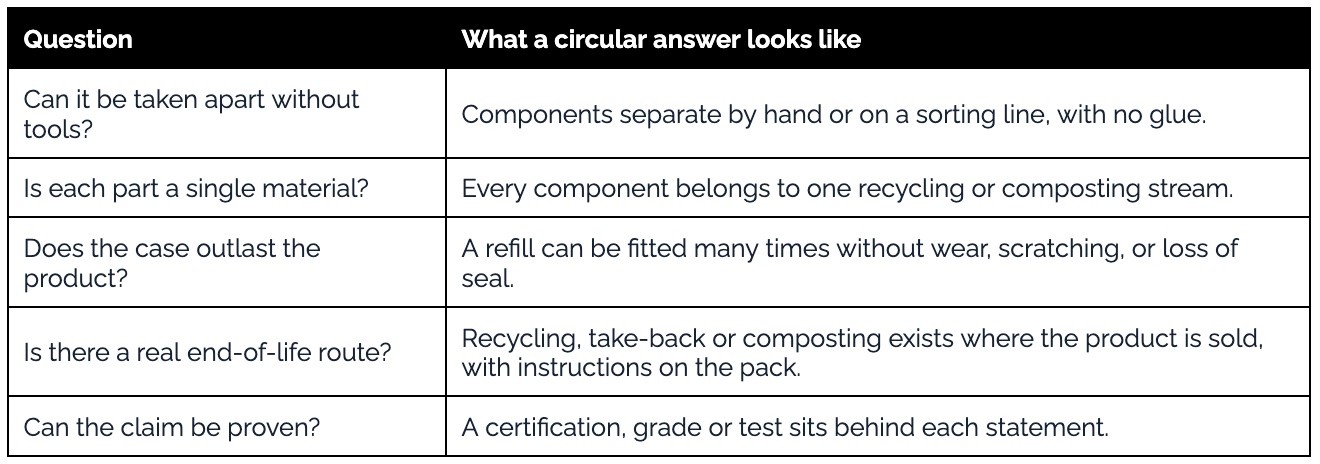
Is your packaging circular? A checklist
Frequently asked questions
What is sustainable packaging in a circular economy?
It is packaging designed so its materials remain in use after the product is finished, through refill, recycling or safe return to nature. The design decides the outcome: separable, single-material components and durable cases make circular use possible.
How can cosmetic brands make packaging circular?
Start with the structure: fewer components, single-material parts, glue-free assembly and a durable case for refills. Then match each material to a real end-of-life route and keep the evidence behind every claim.
Is refillable packaging part of the circular economy?
Yes. A refill keeps the outer case in use for years and reduces the packaging made per unit sold. It counts as circular when the case survives many refills and the refill itself can be recycled or composted.
Why is cosmetic packaging hard to recycle?
Many items combine small parts in different materials, such as a plastic pump, a metal spring and a gasket, which sorting systems cannot separate. Product residue and mixed finishes add further obstacles.
How does the PPWR support a circular economy?
It requires all packaging placed on the EU market to be recyclable by 2030, with graded design for recycling criteria, and sets packaging waste reduction targets for Member States of 5% by 2030, 10% by 2035 and 15% by 2040.
Where to start
Sustainable packaging in a circular economy is not a material choice. It is a chain of decisions, from the number of components to the way they are joined to the instructions printed on the pack. A brand does not need to redesign a whole range at once. Choosing one product, testing it against the checklist above and fixing the weakest link gives a realistic first loop to build on.
Ready to design packaging that stays in the loop? Contact us to start the conversation.
