

A guide to the top sustainable materials for cosmetic packaging
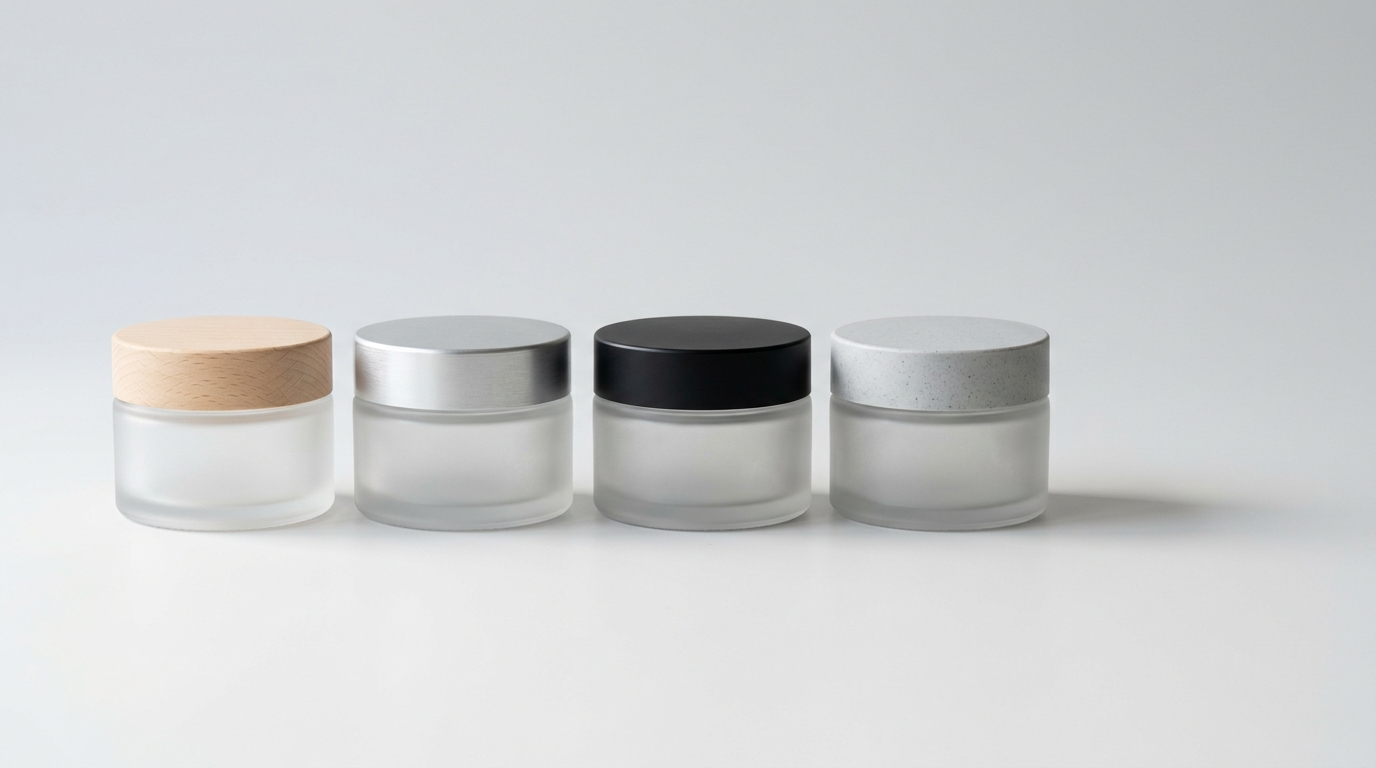
Sustainable packaging materials for cosmetics are those that protect the formula, come from a renewable, recycled or certified source, and have a real route at end of life. No material meets all three in every case, which is why the right choice depends on the product, the market and the evidence behind the claim.
What makes a packaging material sustainable
A material is not sustainable in itself. It becomes sustainable in a specific pack, for a specific formula, sold in specific markets. The scale of the issue explains why brands now look at this closely: the cosmetics industry produces roughly 120 billion units of packaging a year, and an estimated 70% ends up in landfill.
Three things decide whether a material earns the word: where it comes from, how well it does its job, and what happens to it afterwards. The sections below apply those three tests to each material.
How to compare materials: five questions to ask
Where does it come from? Renewable, recycled or certified inputs are easier to defend than virgin fossil material.
Does it protect the formula? A pack that fails adds waste, whatever it is made of.
What happens at end of life? Check that a recycling, take-back or composting route exists where the product is sold.
How heavy is it? Weight affects transport and, in many markets, packaging fees.
Can you prove the claim? A certification, a test or a documented grade should sit behind each statement.
Use these questions to compare any of the sustainable packaging materials for cosmetics below, from glass to bio-based composites. Answering them in order keeps the choice grounded in the product, not in the trend of the moment. A material that fails the second question, for example, should be ruled out before its other qualities are discussed.
The mPackting materials page and the page on renewable materials describe the materials mPackting works with.
Glass
Glass is inert, protects most formulas well, and gives a premium weight in the hand. It is widely collected for recycling, and it can be reused in refill systems when the jar is designed to be kept. mPackting works with glass partners such as Estal on its glass collections.
Strengths: protects the formula, widely recycled, suited to refill.
Limits: heavier to ship, fragile, and closures or liners often add other materials.
Best for: creams, serums and fragrances where protection and perceived quality matter.
Aluminum
Aluminum is light, robust and widely recycled. It makes good tins, tubes, caps and compact cases, and it offers a strong barrier for sensitive formulas.
Strengths: light, strong barrier, accepted by many recycling systems.
Limits: dents easily, and coatings, liners and printed finishes can complicate sorting.
Best for: balms, tins, compacts, tubes and closures.
FSC-certified wood
Wood is a renewable raw material, and FSC certification indicates that it comes from responsibly managed forests. It brings warmth, visible grain and a tactile quality that glass and metal do not. mPackting works with FSC-certified wood, and its assembly systems use glue-free inserts so the wood stays separable from other parts.
Strengths: renewable, certified source, strong tactile identity, can be a single-material closure.
Limits: shows natural variation between pieces if used au naturel. mPackting offers a wide range of customisable finishes and an industrial production process that keeps that variation under control.
Best for: caps, collars and cases for premium skincare, make-up and fragrance.
Cork
Cork comes from the bark of the cork oak, which regrows after harvesting. It is soft, warm and light, and it works where a gentle grip or a natural texture is needed. It is rarely used for a whole container and works best as a component, such as the inner capsule in mPackting's CorkFit system.
Strengths: renewable, light, natural texture.
Limits: works best as an insert or capsule, with natural variation between pieces.
Best for: inner capsules, stoppers and inserts.
Recycled plastic (PCR)
Post-consumer recycled plastic reuses material already in circulation and reduces demand for virgin plastic. It is a practical route when a product needs a plastic part, for example because of weight, price or a specific format.
Strengths: reduces virgin plastic, wide choice of formats.
Limits: it remains plastic and still needs a recycling route, and supply and colour can be inconsistent.
Best for: tubes, bottles and jars where weight, price or format drive the choice.
Bio-based composites and bioplastics
Bio-based materials start from renewable biomass instead of fossil raw material. They are not all alike, and bio-based does not mean biodegradable. For bioplastics from sources such as corn starch or sugarcane, environmental benefits depend on composting infrastructure and the source of the raw material.
mBlack™ is mPackting's composite of biochar and biopolymer. The biochar comes from wood production waste, and the material is shaped by standard injection moulding, which gives a deep black, smooth surface and precise moulded shapes.
Strengths: bio-based input, precise moulded shapes, a distinctive dark finish.
Limits: end-of-life depends on available collection, and any compostability or biodegradability claim needs certification and a disposal route.
Best for: caps, collars and decorative parts that need a precise shape and a dark finish.
Paper and fibre
Fibre-based packaging made from paper, board or moulded pulp is renewable or recycled, and widely collected. It works best for dry products and for secondary packaging, because moisture and oils limit it elsewhere.
Strengths: renewable or recycled input, light, widely collected.
Limits: weak barrier against moisture and oils, and plastic coatings can make it hard to recycle.
Best for: outer cartons, inserts and tubes for dry products.
Which material for which product
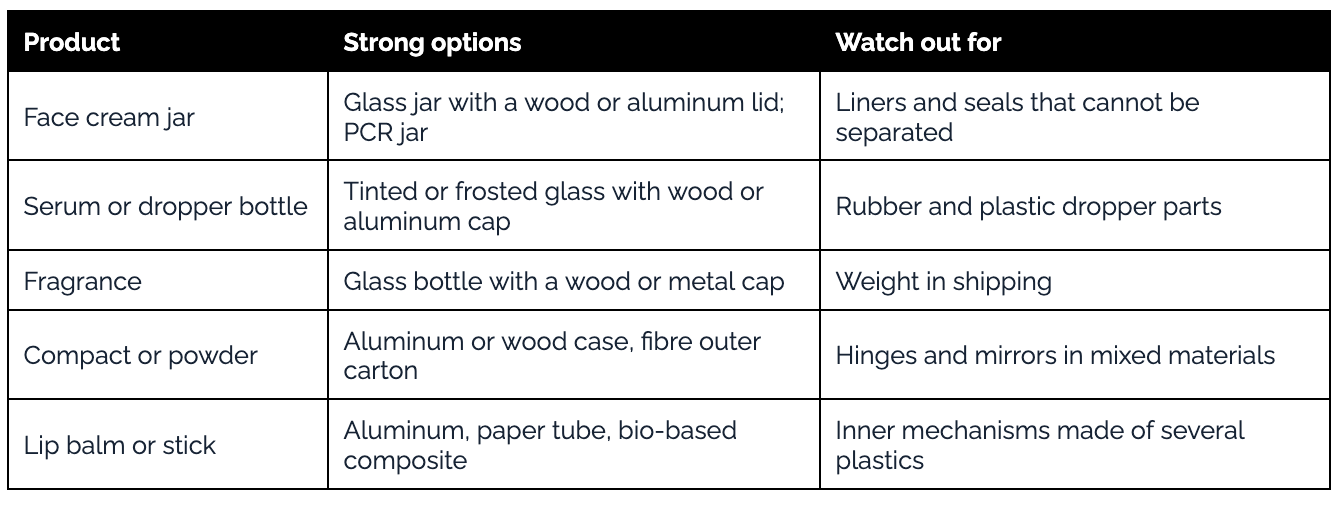
The pairings below show how sustainable packaging materials for cosmetics map to common product types. They are our assessment, not tested rules. Test the formula in the final pack before the first production order.
Mistakes to avoid
Choosing compostable without a disposal route. Unless industrial composting is available where the pack ends up, easy-to-recycle materials are often the safer choice.
Mixing materials you cannot separate. A pack that cannot be taken apart cannot be recycled as one stream.
Using generic claims. Since 27 September 2026, Directive (EU) 2024/825 prohibits generic environmental claims without proof, and terms such as "green", "ecological" and "biodegradable" are among the examples. Name the material and the certification instead.
Choosing by material alone. Weight, structure and assembly count as much as the raw material. The mPackting guides to recyclable skincare packaging and the PPWR in cosmetic packaging look at what recyclability requires.
Frequently asked questions
What are the most sustainable packaging materials for cosmetics?
There is no single winner. Glass, aluminum, FSC-certified wood, cork, recycled plastic and bio-based composites all qualify when they protect the formula, come from a responsible source and have a real end-of-life route where the product is sold.
Is glass or aluminum better for cosmetic packaging?
It depends on the product. Glass protects most formulas and feels premium but weighs more. Aluminum is light and robust, and suits tins, tubes and caps. Both are widely recycled, so the choice usually comes down to weight, look and formula.
Is bio-based packaging the same as biodegradable?
No. Bio-based means the raw material comes from renewable biomass. Biodegradable means the material breaks down under defined conditions. A material can be one without the other, so each claim needs its own evidence.
Is wood a sustainable material for cosmetic packaging?
It can be. Wood is renewable, and FSC certification indicates responsibly managed forests. Its sustainability in a pack also depends on design: glue-free assembly and no hidden inserts keep the wood separable at end of life.
How do I choose a sustainable material for my formula?
Start with what the formula needs, then check the source, the weight, the end-of-life route in your markets and the evidence behind any claim. Test the formula in the final pack before the first production order.
Where to start
The best sustainable packaging materials for cosmetics are the ones that fit your formula, your brand and your markets, and that you can describe accurately. Start with the five questions, shortlist two or three materials, and test them in the real pack.
Not sure which material fits your formula and your brand? mPackting works with FSC-certified wood, cork, glass and bio-based composites, and can help you choose and develop the right combination. Contact us to start the conversation.
